How Evaporative Cooling Towels Actually Work (and Why They Stop Working in Humid Weather)
Cooling towels and similar evaporative cooling gear work impressively well on a hot, dry day and then seem to barely do anything during a hot, humid one — a pattern that confuses a lot of people into thinking the product is defective, when it’s actually working exactly as the underlying physics dictates. Here is why evaporative cooling relies on one specific mechanism, why humidity breaks that mechanism, and how to choose cooling gear appropriately for actual conditions.

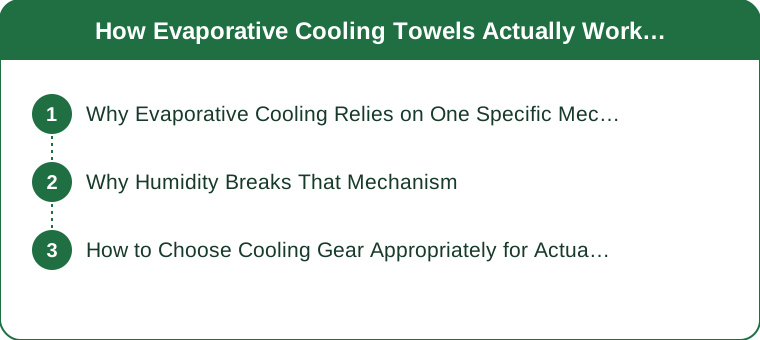
Why Evaporative Cooling Relies on One Specific Mechanism
The physics explained: the the-cooling-comes-from-evaporation-not-just-being-wet (the cooling effect coming specifically from water evaporating off the fabric surface, which requires and removes heat energy in the process — the the-mechanism-is-evaporation-specifically-not-simply-dampness), the the-evaporation-requires-a-humidity-gradient (the water evaporating from a wet surface into the surrounding air only as fast as the air’s existing moisture level allows — the the-surrounding-air-has-to-have-room-to-absorb-more-moisture), the the-most-cooling-towels-use-a-simple-wet-and-wring-mechanism (the majority of cooling towel products relying on this same basic wet-fabric evaporation principle regardless of specific marketing language — the its-the-same-underlying-mechanism-across-most-branded-versions), the the-body-sweat-uses-the-identical-mechanism (the body’s own natural sweat cooling system working through the exact same evaporation principle, which is why the towel simply amplifies something the body already does — the your-own-sweat-cooling-and-the-towel-share-the-same-physics), the the-airflow-speeds-up-the-same-mechanism (the moving air accelerating evaporation rate, which is why cooling towels feel more effective with any breeze or fan present — the airflow-is-a-force-multiplier-on-the-same-mechanism), and the reframe (the cooling towel’s mechanism as pure evaporative physics, identical to the body’s own sweat cooling system, just externally amplified — understanding this explains exactly why humidity changes everything)).

Why Humidity Breaks That Mechanism
The humidity problem: the the-humid-air-is-already-nearly-saturated-with-moisture (the surrounding air in high humidity already holding close to its maximum moisture capacity, leaving little room for additional water to evaporate into it — the theres-nowhere-for-the-water-to-go-in-saturated-air), the the-evaporation-rate-drops-sharply-as-humidity-rises (the rate of evaporation, and therefore the cooling effect, dropping in a fairly direct relationship with rising relative humidity — the the-relationship-between-humidity-and-cooling-effect-is-fairly-direct-and-predictable), the the-this-is-the-same-reason-sweat-feels-less-effective-in-humid-weather (the body’s own sweat cooling suffering identically in humid conditions, which is why humid heat generally feels more oppressive than dry heat of the same temperature from the how-to-stay-cool-during-summer-workouts-guide logic — the this-explains-a-broader-pattern-not-just-the-towel), the the-a-cooling-towel-can-still-feel-slightly-cool-from-initial-water-temperature-alone (the towel providing a brief cooling sensation purely from the water’s initial temperature even without effective evaporation, which fades quickly and shouldn’t be mistaken for the sustained evaporative effect — the a-brief-initial-cool-feeling-isnt-the-same-as-the-real-sustained-mechanism), the the-no-fabric-technology-change-fixes-a-fundamentally-humidity-blocked-mechanism (the marketing improvements to fabric weave or design not being able to overcome the basic physical constraint that humid air imposes on evaporation itself — the fabric-innovation-cant-override-the-actual-physics-of-humid-air), and the frame (the humidity problem as air simply having no room left to absorb more moisture, which drops the evaporation rate and therefore the cooling effect — not a product defect, but the underlying physics functioning exactly as it should).
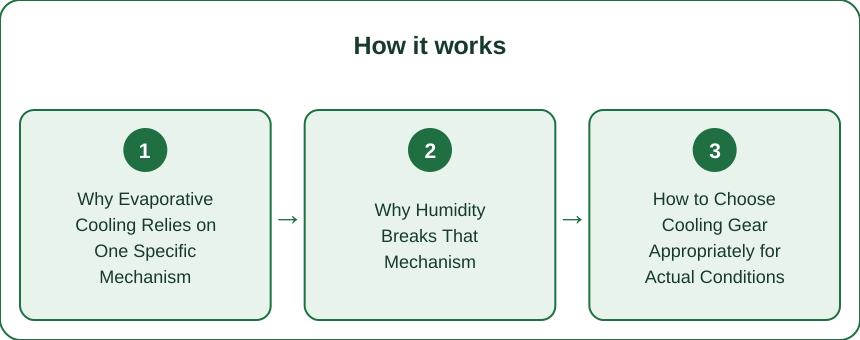
How to Choose Cooling Gear Appropriately for Actual Conditions
The practical matching guide: the check-actual-humidity-not-just-temperature-before-relying-on-evaporative-gear (the checking relative humidity specifically, not just the temperature reading, before expecting strong performance from evaporative cooling products — the humidity-not-temperature-is-the-relevant-number-to-check), the the-use-evaporative-cooling-gear-in-hot-dry-conditions-specifically (the evaporative towels and similar gear performing best specifically in low-humidity heat, where the mechanism has room to work — the match-the-tool-to-the-conditions-it-actually-suits), the the-in-humid-conditions-lean-on-different-cooling-strategies (the direct ice application, cooling vests using different mechanisms, or simply more frequent hydration and shade breaks working better when humidity blocks evaporation from the pre-cooling-before-a-hot-workout-guide logic — the different-mechanism-cooling-tools-for-humid-conditions), the the-combine-airflow-with-evaporative-gear-when-possible (the pairing a fan or any breeze with evaporative cooling gear to help maintain some evaporation rate even in moderately humid conditions — the airflow-can-partially-offset-moderate-humidity), the the-adjust-expectations-rather-than-assuming-a-defective-product (the recognizing reduced performance in humidity as expected physics rather than assuming the product itself has failed or was low quality — the reduced-humid-weather-performance-is-expected-not-a-product-flaw), and the frame (the practical matching guide as checking actual humidity levels, reserving evaporative gear for dry heat specifically, switching to different cooling mechanisms in humid conditions, adding airflow when possible, and adjusting expectations rather than assuming a product defect — choosing the right tool for the actual weather, not just any ‘cooling’ product).
Cooling towels and similar evaporative gear work through the physics of water evaporating off a fabric surface, which requires a humidity gradient — room in the surrounding air to absorb more moisture — and works identically to the body’s own sweat cooling mechanism, just externally amplified. In high humidity, the air is already close to its moisture capacity, leaving little room for additional evaporation, which sharply reduces the cooling effect regardless of fabric technology or design, and is the same reason sweat itself feels less effective in humid weather. Choose cooling gear by checking actual relative humidity rather than just temperature, reserving evaporative towels specifically for hot, dry conditions where the mechanism has room to work, switching to different-mechanism cooling tools like direct ice or more frequent shade and hydration breaks in humid weather, adding airflow when possible to partially offset moderate humidity, and recognizing reduced performance in humid conditions as expected physics rather than a product defect.
See It in Motion
Seen here: Racerback Tank Top - White — shop similar styles on bubblelime.com
Keep Reading
This article is for general informational and styling purposes only. Fit, sizing, and product availability may vary.