Cool Gear: The Products That Actually Beat Summer Heat (Tested Logic Included)
Every July, the cooling-gadget industry blooms like heat rash: towels promising 30 degrees of chill, neck fans, cooling vests, arctic bedding, misting everything. Some of it leverages real thermodynamics; some of it leverages your discomfort and a credit card. The sorting principle is simple once stated — cooling products work by evaporation, conduction, airflow or phase-change, and each mechanism has honest limits. Here is the guide that sorts the aisle by physics, plus the heat-safety basics that outrank every gadget. (The medical line first: heat exhaustion — heavy sweating, dizziness, nausea, headache — means stop, shade, water and cooling now; confusion or hot dry skin is heatstroke territory: emergency services, immediately.)

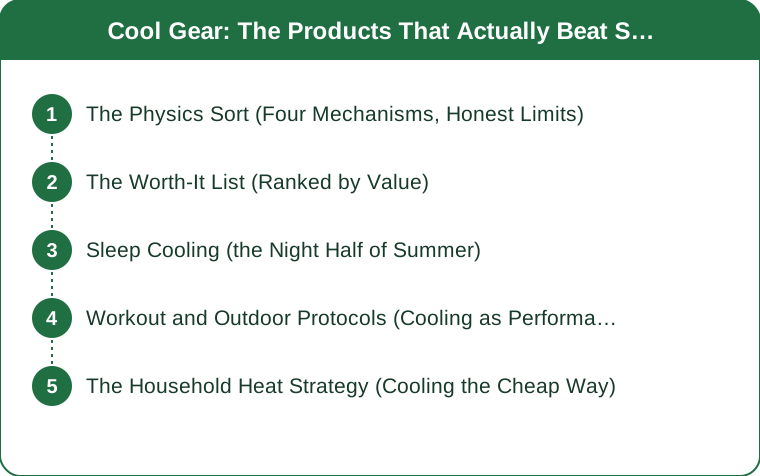
The Physics Sort (Four Mechanisms, Honest Limits)
The taxonomy that decodes every product: evaporative cooling (water evaporating pulls heat — cooling towels, misting fans; genuinely effective and humidity-limited: in muggy air evaporation stalls and so does the product), conductive cooling (cold mass against skin — ice packs, phase-change vests, cooling pillows; works anywhere including humidity, limited by how long the cold mass lasts), airflow (fans moving heat away and accelerating evaporation — effective, cheap, compounding with the first mechanism), and phase-change materials (waxes and gels engineered to hold a target temperature while melting — the sustained middle ground between ice and nothing). The immediate practical yield: know your climate before buying — dry-heat dwellers get full value from evaporative gear, humid-summer women should weight conduction and airflow. Half the aisle’s bad reviews are just mechanism-climate mismatches.
The Worth-It List (Ranked by Value)
The gear that earns its price: the cooling towel ($10–15 — evaporative, wet-wring-snap, draped on the neck where blood runs shallow; legitimately effective in dry-to-moderate humidity and the category’s best value), the neck fan or handheld fan ($15–30 — airflow on demand; the bladeless neck designs solved the hair problem, battery life is the spec to check), cold-water immersion of hands and forearms (free — the underrated athlete’s trick: forearm blood vessels dump heat fast; a sink or cooler works between sets or garden shifts), phase-change neck wraps and vest inserts ($25–60 — the sustained-conduction tier for long hot exposures: sideline parents, outdoor workers, hot-flash management), and the frozen-water-bottle economy (free — rotating bottles from freezer to grip to drink as they melt: conduction, then hydration, no purchase required). The honest snub tier: most cooling insoles, wearable AC pendants and anything promising personal climate control from a AAA battery — thermodynamics does not negotiate at that wattage.

Sleep Cooling (the Night Half of Summer)
The bedroom program — because hot nights tax recovery, mood and the next day’s heat tolerance: the airflow foundation (a fan crossing the bed remains the best value in sleep cooling; the box-fan-in-window exhaust trick on hot evenings clears the day’s heat load), bedding materials that conduct and breathe (percale cotton, linen and bamboo-derived weaves sleep measurably cooler than microfiber and jersey — the cooling-sheet category is mostly just honest materials science with premium branding: buy the weave, skip the buzzwords), the strategic shower (lukewarm-to-cool before bed drops core temperature into sleep-onset range — the free intervention with actual sleep-science backing), targeted conduction for the desperate nights (a cold pack at the neck or feet, the chilled pillowcase rotation), and the mattress caveat (foam mattresses run hot by design — toppers and pads exist, but airflow and bedding fix more per dollar). Sleep-cooling priority order: fan, weave, shower, then gadgets. The $200 arctic-branded comforter can wait behind all four.
Workout and Outdoor Protocols (Cooling as Performance Strategy)
The active applications: pre-cooling works (athletes chill before hot events — your version: the cold towel and shade for ten minutes before the hot run, the frozen bottle in hand for the first mile), pace the intensity to the wet-bulb reality (humid heat blocks your main cooling system — the same workout is objectively harder; ego is not a thermometer), schedule around the oven hours (dawn and dusk own summer training; the 2pm run is a negotiation with physiology you will lose), gear the session (cooling towel staged in a cooler, water beyond thirst, the hat-and-UPF sun layer working with the cooling layer), and know the body’s own dashboard: reduced sweating during heavy exertion, goosebumps in heat, or cessation of thirst are escalation signals, not quirks. The gadgets assist at the margins. Scheduling, pacing, shade and water do the structural work — the gear just makes the margins more comfortable.
The Household Heat Strategy (Cooling the Cheap Way)
The zoomed-out system that gadgets decorate: manage solar gain like a submarine (blinds and curtains down on sun-facing windows during the day — the single biggest free intervention in home cooling; blackout curtains earn summer double-duty), run the thermal schedule (windows open during cool nights and early mornings, sealed before the day heats — the flush-and-trap cycle every pre-AC generation knew), deploy fans for people not rooms (fans cool skin, not air — running them in empty rooms is decoration; the ceiling-fan direction check — counterclockwise in summer — takes ten seconds), cook outside the peak (the grill’s summer superpower, the slow-cooker’s off-season case, the no-cook dinner genre), and hydrate the household on a schedule rather than on thirst (thirst lags need in heat — the water bottle rules apply at home too). Total cost of the structural strategy: nearly zero. The gadgets then get the job they were built for: the last comfortable ten percent, draped coolly on your neck.
Summer cooling, sorted by physics: evaporation and airflow for dry heat, conduction for humid days, percale-and-fan sleep before premium bedding, pre-cooling and dawn scheduling for training, and the blinds-down flush-and-trap house strategy underneath it all. The $12 towel and the free habits do the heavy lifting; the aisle’s remaining promises can stay shelved. Heat is a physics problem — and you now hold the cheat sheet. Stay cool, literally and on budget.
See It in Motion
Seen here: Super High Waist Embossed Yoga Leggings with Inner Pocket — shop it on bubblelime.com
Keep Reading
This article is for general informational and styling purposes only. Fit, sizing, and product availability may vary.