The Complete Guide to Ending Cooling Gear Season Properly
Quick Answer: Cooling gear fails in storage more often than in use. Evaporative towels and wraps need to be fully dried before storage or they grow mildew that permanently reduces absorbency; phase change packs degrade if stored deformed or in heat; and any gear stored damp is usually unrecoverable by spring. Wash everything according to type, dry completely, store flat in a cool dry place with airflow, and assess for replacement now rather than discovering the failure on the first hot day next year.
The cooling towel goes in the gym bag in September and comes out in June smelling like a pond and absorbing nothing.
This is entirely preventable, and end of season is the right time to deal with it properly. Here’s the full process by gear type, plus how to tell what’s already finished.

How does each type of cooling gear actually work?
You can’t store it correctly without knowing which mechanism you’re preserving.
Evaporative gear - towels, neck wraps, arm sleeves, most cooling caps. These work by holding water in a specially structured fabric and releasing it slowly through evaporation. Evaporation requires energy, which is drawn as heat from the surface underneath - your skin.
What matters for storage: the fabric structure is what does the work, and anything that clogs, coats or degrades that structure reduces performance permanently. Mildew, detergent residue and fabric softener are the three main threats.
Phase change material gear - certain cooling vests and packs. These use a substance engineered to melt at a specific temperature, typically somewhere in the 50s to 60s F. Absorbing heat to change from solid to liquid is what produces the cooling, and the process is repeatable.
What matters for storage: the packs should be stored in their intended shape and not exposed to extreme heat, which can damage the containment and cause leakage. Deformed packs freeze unevenly and cool unevenly afterwards.
Ice or gel packs. Simple, and gel degrades over time - the gel can separate or harden, and punctures are the usual failure mode.
Chemical activated packs. Single use, so this is a disposal and inventory question rather than a storage one - check expiry dates, since they do have them.
Cooling fabrics in clothing - garments marketed with cooling finishes. Some rely on a treatment that washes out over time; others rely on yarn structure and fibre choice, which is durable. The distinction matters for expectations, and the label usually tells you which you bought.
How do you clean each type properly?
Wrong cleaning is the most common way cooling gear gets ruined, and it usually happens at end of season.
Evaporative towels and wraps:
- Wash in cool or warm water with a small amount of mild detergent
- No fabric softener, ever. Softener coats fibres and directly destroys the absorbency the whole product depends on - this is the single most damaging mistake
- No bleach, which degrades the fibres
- Rinse thoroughly - detergent residue also clogs the structure
- Air dry completely, spread out rather than folded
If there’s already an odour: soak in a solution of cool water and white vinegar for about 30 minutes, then wash normally. Vinegar addresses mildew smell without coating fibres, which is why it works better than scented products here.
Cooling vests with removable packs:
- Remove all packs first
- Wash the shell per its label, usually cool and gentle
- Wipe packs with a damp cloth and mild soap; never submerge unless the manufacturer says to
- Dry both completely and separately
Cooling sleeves and clothing:
- Cool wash, gentle cycle, inside out
- No softener - same reason
- Air dry. Heat damages both elastane and any surface treatment
Gel packs: wipe the exterior with mild soap and water, dry fully, inspect for leaks or hardening.
The universal rules: no fabric softener, no high heat, and completely dry before storage. Those three cover most failures.
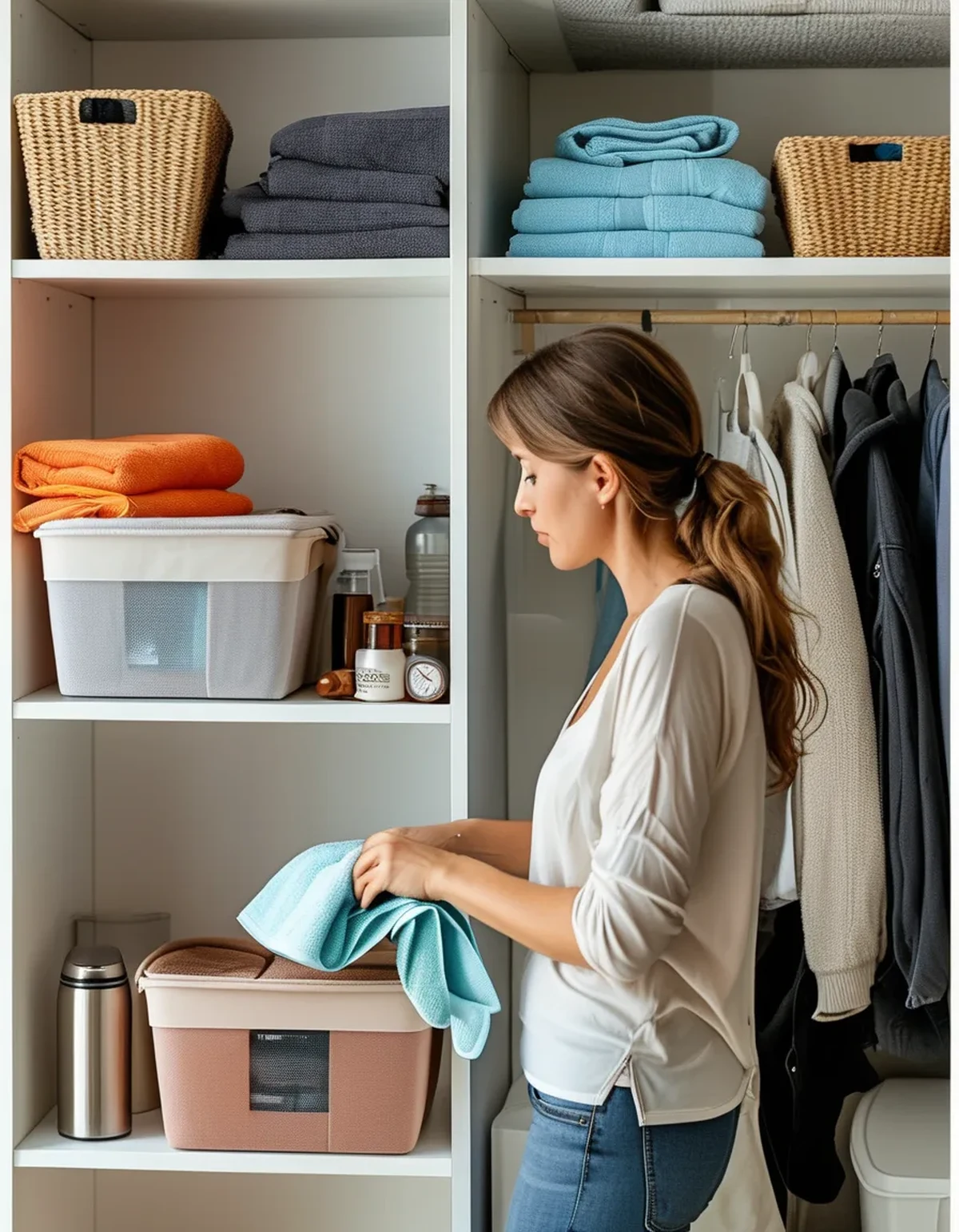
How should you store it so it works next year?
The storage conditions matter as much as the cleaning.
Completely dry, without exception. This is the number one cause of ruined cooling gear. Even slightly damp fabric in a sealed container for eight months produces mildew, and mildew in an evaporative fabric is often permanent - it discolours, smells, and reduces absorbency.
How to be sure it’s dry: air dry for at least 24 hours after it feels dry to the touch, spread flat or hung open. Thick evaporative towels hold moisture in the core long after the surface feels dry, which is exactly how people get caught out.
Store with airflow, not sealed. A breathable cotton bag or an open box is better than a sealed plastic container, which traps any residual moisture. If you use a plastic bin, don’t seal the lid fully.
Cool, dry, dark. A garage or attic that swings between temperature extremes is one of the worst options - which is where most people put seasonal gear. An interior cupboard is better. Heat degrades phase change materials, gel packs and elastane alike.
Store flat where possible. Phase change packs held bent or folded can deform permanently. Evaporative towels stored in a tight roll for months can develop set creases where the fabric structure is crushed.
Label the box with the date and contents. A note on what needs replacing next season saves you rediscovering it on the first hot day.
One last thing: check for and address any residual odour before storage rather than after. A smell that goes into storage comes out worse, and vinegar soaking works far better on a fresh problem than on eight months of it.
How do you tell what should be replaced rather than stored?
Assess now, while you remember how it performed.
Evaporative towels and wraps - replace if:
- Water no longer absorbs quickly when you wet it - the clearest sign the structure is clogged or degraded
- It stays wet without producing any cooling sensation - the evaporation mechanism has failed
- There’s persistent odour after a proper vinegar soak and wash
- There’s visible mildew staining - this typically doesn’t come out and indicates fibre damage
- The fabric has gone stiff or crunchy - usually detergent or mineral buildup, sometimes recoverable with a vinegar soak, often not
Typical lifespan with regular use: one to three seasons, depending on quality and care.
Cooling vests - replace or repair if:
- Packs are leaking, hardened, or no longer freeze evenly
- The shell has torn at stress points
- Cooling duration has noticeably shortened - the most useful practical measure
Packs are often replaceable separately, which is far cheaper than a new vest. Check the manufacturer before buying a whole replacement.
Cooling clothing - replace if:
- The cooling effect has disappeared entirely - likely a washed-out surface treatment
- Elastic has gone, which affects both fit and function
The end-of-season inventory habit: write down what you have, what condition it’s in, and what needs buying. Cooling gear goes on sale heavily at end of season, so the cheapest time to replace it is now, not in June when you rediscover the problem in a heatwave.
What Nobody Tells You About Cooling Gear
Six things that change how you buy and use it.
Evaporative gear barely works in high humidity. The whole mechanism depends on evaporation, and evaporation slows dramatically as humidity rises. In genuinely humid conditions an evaporative towel mostly makes you wet. Phase change and ice-based gear work regardless of humidity, which is the actual reason to own one.
Cooling gear mostly changes how you feel, not your core temperature. Neck and wrist cooling produces a strong sensation of relief because of the concentration of thermoreceptors there - the effect on actual core body temperature is much smaller. That’s fine for comfort, and it’s important not to rely on it as heat safety.
Pre-cooling has better evidence than during-exercise cooling. Lowering body temperature before a hot session has reasonable support for improving performance and heat tolerance, and it’s the use case most people never try.
A cooling vest worn under other clothing works better than over. Trapping the cooling against the skin rather than letting it dissipate outward is the point, and a surprising number of people wear them over a jacket.
The gym bag is where cooling gear goes to die. A damp towel in a closed bag for two days is enough to start the mildew problem that ruins it by season’s end. Take it out the same day, every time - that habit alone probably doubles the life of an evaporative towel.
Cooling gear is not a heat illness remedy. Heat exhaustion and heat stroke are medical situations requiring cooling, fluids, and in the case of heat stroke, emergency medical care. Feeling cooler is not the same as being safe, and gear that produces a strong cooling sensation can mask genuine warning signs.
FAQ: Cooling Gear Storage Questions, Answered
Can I put cooling towels in the dryer?
No. Heat damages the fibre structure that produces the cooling effect, and it can permanently reduce absorbency. Air dry spread out, and give it a full 24 hours beyond when it feels dry.
How do I get the smell out of a cooling towel?
Soak in cool water with white vinegar for about 30 minutes, then wash with mild detergent and no softener, and air dry completely. If the smell persists after that, the fabric is likely mildew-damaged and the towel is finished.
Do cooling vests need to be refrigerated in storage?
Phase change packs generally don’t need refrigeration for storage - check the manufacturer’s guidance, as some specify a storage temperature range. Keeping them out of heat matters more than keeping them cold.
How long does cooling gear last?
Evaporative towels typically one to three seasons with regular use. Vests last longer if the packs are replaced as needed. Cooling clothing with a surface treatment loses effect faster than fabric-structure versions, sometimes within a season of frequent washing.
Is it worth buying cooling gear on end-of-season sale?
Yes - it’s the cheapest point of the year and the products don’t change much between seasons. Store it properly and unopened gear keeps well. Check expiry dates on any chemical activated packs.
Should I store gear in the garage?
Not ideally. Garages and attics swing between temperature extremes, and heat degrades phase change materials, gel packs and elastane. An interior cupboard at stable room temperature is considerably better.
TL;DR:
- More cooling gear is ruined in storage than in use, and dampness is the main cause
- Never use fabric softener on evaporative gear - it coats fibres and destroys absorbency permanently
- Air dry for a full 24 hours beyond feeling dry, then store with airflow rather than sealed
- Store flat and cool: garages and attics are among the worst places for phase change packs and elastane
- Assess for replacement now, while you remember how it performed - a towel that no longer absorbs quickly is finished
- Evaporative gear barely works in humidity; phase change gear does
- End of season is the cheapest time to replace anything that failed
The towel that ruins itself does it in a closed gym bag in September, not in a heatwave in July.
See It in Motion
Seen here: Super High Waist Embossed Yoga Leggings with Inner Pocket — shop it on bubblelime.com
Keep Reading
This article is for general informational and styling purposes only. Fit, sizing, and product availability may vary.