The Complete Guide to Cooling Gear for Summer Workouts
Quick Answer: Evaporative cooling gear (towels, neck wraps) works through real physics — water evaporating off fabric pulls heat from your skin — and is effective in dry heat but far less effective in high humidity. Ice vests provide more direct, humidity-independent cooling but are heavier and less practical for the workout itself. Match the gear to your actual climate, not just the marketing claims.
Summer workout gear promises to keep you cool through sheer product design, but the physics behind different cooling gear varies enormously — and so does how well each type actually performs depending on your climate.

How does evaporative cooling gear actually work?
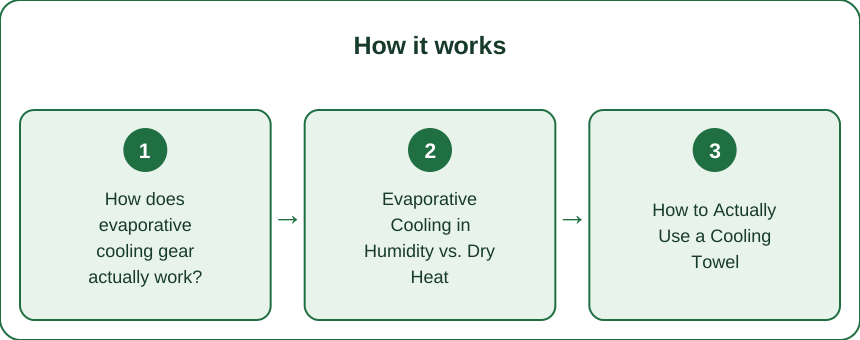
Cooling towels and neck wraps are typically made from a fabric that holds water and releases it slowly as it evaporates off your skin — evaporation is an endothermic process, meaning it actively pulls heat away as it happens. This is the same mechanism your own sweat uses, just delivered through fabric that holds more water than skin alone can. The gear doesn’t chemically cool anything; it accelerates a process your body is already doing.
Evaporative Cooling in Humidity vs. Dry Heat
This is the single biggest factor people miss: evaporative cooling gear works dramatically better in low humidity, dry heat than in muggy, humid conditions. In dry heat, evaporation happens fast and the cooling effect is strong. In high humidity, the air is already saturated with moisture, evaporation slows way down, and the same towel that felt great in Arizona barely does anything in Georgia in August. Check your local humidity, not just temperature, before deciding this gear will help.
How to Actually Use a Cooling Towel
Soak it fully, wring out the excess (it should be damp, not dripping), and snap it a few times before use — this activates the fabric’s evaporative properties. Reactivate every 20-30 minutes by re-wetting as the towel dries out; a bone-dry towel provides zero cooling benefit no matter how good the product is.

Do Cooling Vests Actually Work for Athletes?
Ice-based cooling vests provide a different, more direct form of cooling — they lower skin and sometimes core temperature before or between activity bouts, which is well-supported for pre-cooling before a hot event (reducing early heat strain). They’re heavier and bulkier, so they work better worn before or between efforts rather than during continuous movement.
Pre-Cooling Before a Hot Workout
Pre-cooling — wearing an ice vest or sitting in air conditioning for 15-20 minutes before a hot workout or event — has decent evidence for delaying the onset of heat-related fatigue during the activity itself. This matters most for longer outdoor efforts in genuinely hot conditions, less so for a 30-minute indoor session.
Common Cooling Gear Mistakes
The most common mistakes: buying evaporative gear for a humid climate where it underperforms, letting a cooling towel dry out mid-workout without re-wetting, and leaving gear in a hot car (which can degrade fabric and, in the case of gel-based cooling products, damage the gel packs). A gym bag baking in a hot car all day can also make cooling gear smell faster from trapped moisture and heat.
FAQ: Cooling Gear Questions, Answered
What’s the best cooling gear for humid climates?
Ice-based options (vests, neck wraps with gel inserts) work more reliably in humidity than purely evaporative towels, since they don’t depend on evaporation rate.
How often should I re-wet a cooling towel?
Every 20-30 minutes of active use, or sooner if it feels fully dry to the touch.
Are frozen water bottle hacks a real substitute for cooling gear?
A frozen water bottle rolled on pulse points (wrists, neck) is a legitimate low-cost alternative that works on similar cooling principles, though it’s less convenient than purpose-made gear.
TL;DR:
- Evaporative cooling gear (towels, wraps) works via real physics but underperforms in high humidity
- Ice-based vests give more direct, humidity-independent cooling but are heavier and bulkier
- Re-wet evaporative towels every 20-30 minutes — dry fabric cools nothing
- Pre-cooling 15-20 minutes before a hot event delays heat fatigue during activity
Match your cooling gear to your actual climate’s humidity, and it’ll do far more than the marketing claims alone.
See It in Motion
Seen here: Crewneck Short Sleeve Workout T-Shirt — shop it on bubblelime.com
Keep Reading
This article is for general informational and styling purposes only. Fit, sizing, and product availability may vary.