The Complete Guide to Cooling Gear for People Who Run Hot Year Round
Quick Answer: Running hot year round is usually a combination of higher baseline metabolic heat production, a lower sweating threshold, and environments - homes, offices, cars - that are set for other people. The gear that works is different from seasonal cooling gear: prioritize continuous airflow and moisture transport over evaporative products, which stop working in cool humid air. Base layers, fabric choice, and ventilation beat ice packs and cooling towels for year-round use.
Most cooling gear is designed for the acute problem of a hot day. The chronic problem needs a different toolkit.
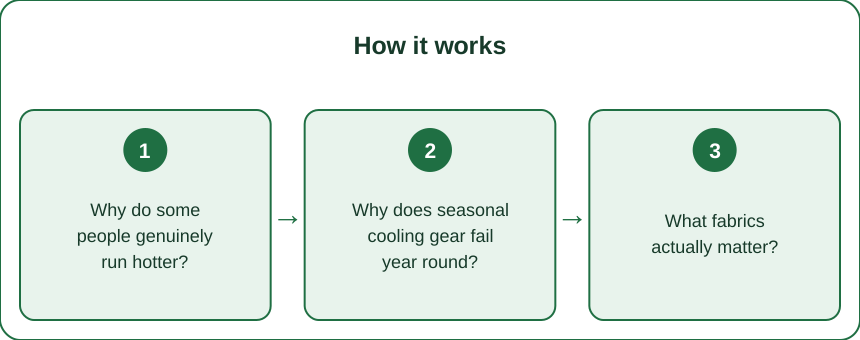
Why do some people genuinely run hotter?
Several mechanisms, and most people who run hot have more than one.
Higher resting metabolic rate relative to body size. More muscle mass, in particular, produces more heat at rest. This is why people often start running hotter after a year of consistent strength training.
A lower sweating threshold. The core temperature at which sweating begins varies between individuals. People who start sweating earlier are not overheating faster - they are cooling more aggressively, earlier.
Surface-area-to-mass ratio. Heat is produced by volume and lost through surface. Different body proportions produce genuinely different heat balance.
Hormonal factors. Thyroid function, the luteal phase of the menstrual cycle, perimenopause and menopause, and some medications all shift thermoregulation measurably.
Trained thermoregulation. Fitter people sweat earlier and more efficiently. It is an adaptation, not a problem.
If running hot is new, significant, and accompanied by other changes - weight change, heart rate change, sleep disruption - that is worth a conversation with a doctor rather than a gear purchase. This is general information, not medical advice.
Why does seasonal cooling gear fail year round?
Because most of it depends on evaporation, and evaporation depends on the surrounding air being able to accept moisture.
Cooling towels, evaporative vests, and PVA products all work by holding water that evaporates and carries heat away. In hot dry air that is extremely effective. In cool humid air - a 65F fall morning at 80 percent humidity - the evaporation rate drops sharply, and the product mostly just makes you wet.
Worse, a wet product in cool air can leave you clammy and then cold, which is its own problem.
The alternatives that work in any conditions rely on different physics:
Conduction - phase-change cooling packs that hold a fixed temperature, typically around 58 to 65F. These work regardless of humidity and are the most reliable year-round option.
Convection - airflow. Ventilation panels, loose weaves, and actual fans. Air movement removes heat whether or not sweat is evaporating.
Moisture transport - fabrics that move sweat away from the skin so it evaporates at the outer surface rather than sitting against you. This is where most of the year-round gains actually are.
What fabrics actually matter?
For chronic heat, fabric selection does more work than any single product.
Merino wool is the counterintuitive one. It regulates in both directions, handles moisture without feeling wet, and resists odor. A lightweight merino base at 150gsm or under is genuinely cooler than a cotton tee in most conditions, and it does not become clammy when the temperature drops.
Open-weave polyester and nylon knits move moisture fastest and dry quickest. Look for mesh panels at the underarm, spine, and behind the knees - the areas with highest sweat rates.
Bamboo viscose feels cool to the touch and is comfortable, but it holds moisture longer than synthetics and can feel heavy once genuinely wet.
Cotton is the one to move away from for anything active. It absorbs moisture and holds it against the skin, which is fine in a chair and poor in motion.
The biggest single change most people can make: switch base layers rather than outer layers. The layer against your skin determines whether moisture moves outward or sits still, and that matters more than anything worn over it.
What does a year-round kit look like?
Six items cover almost everything, and none of them are seasonal.
- Two lightweight merino base layers - one short sleeve, one long. The long sleeve sounds wrong and is not; merino at 150gsm regulates better than a bare arm in a cold office.
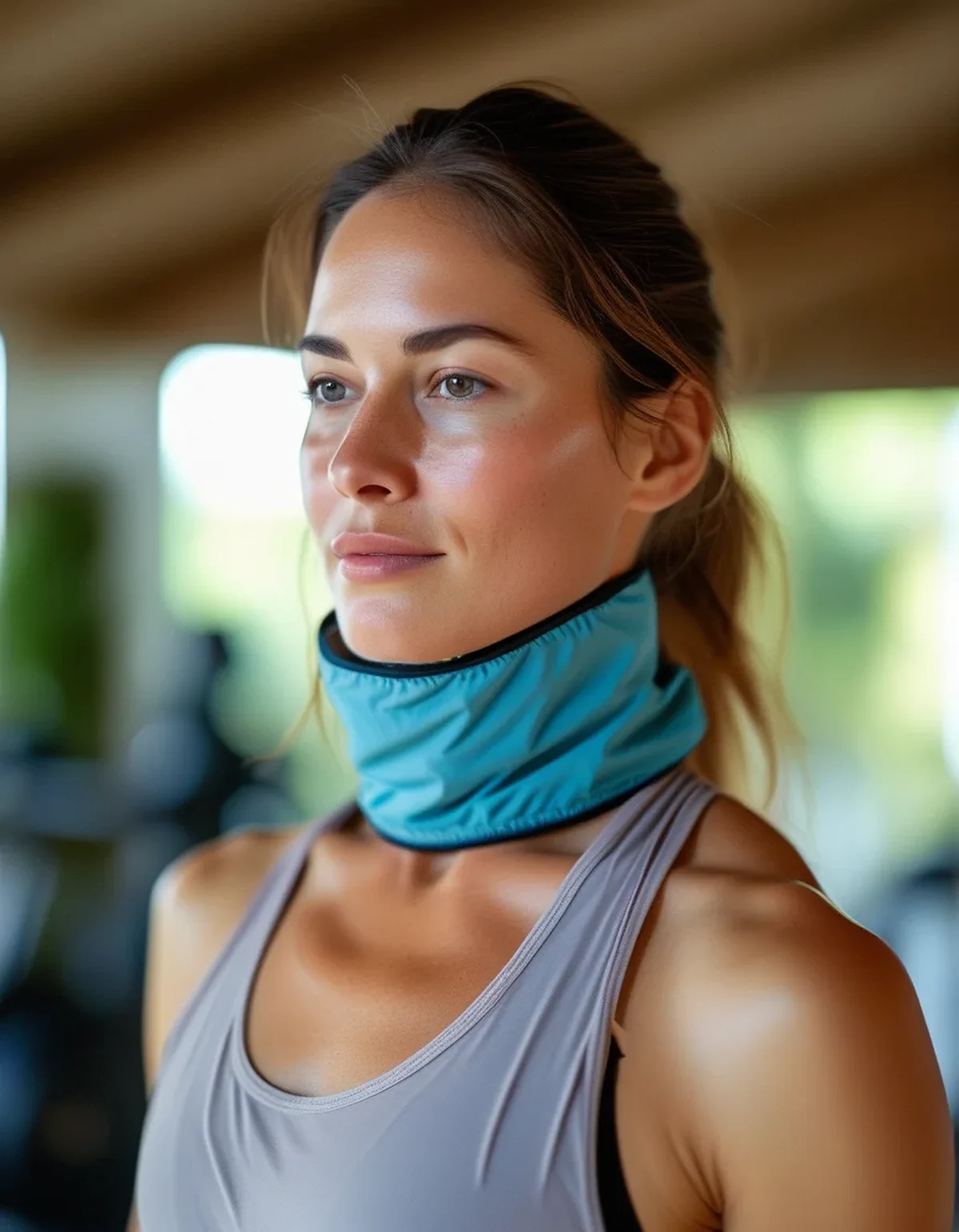
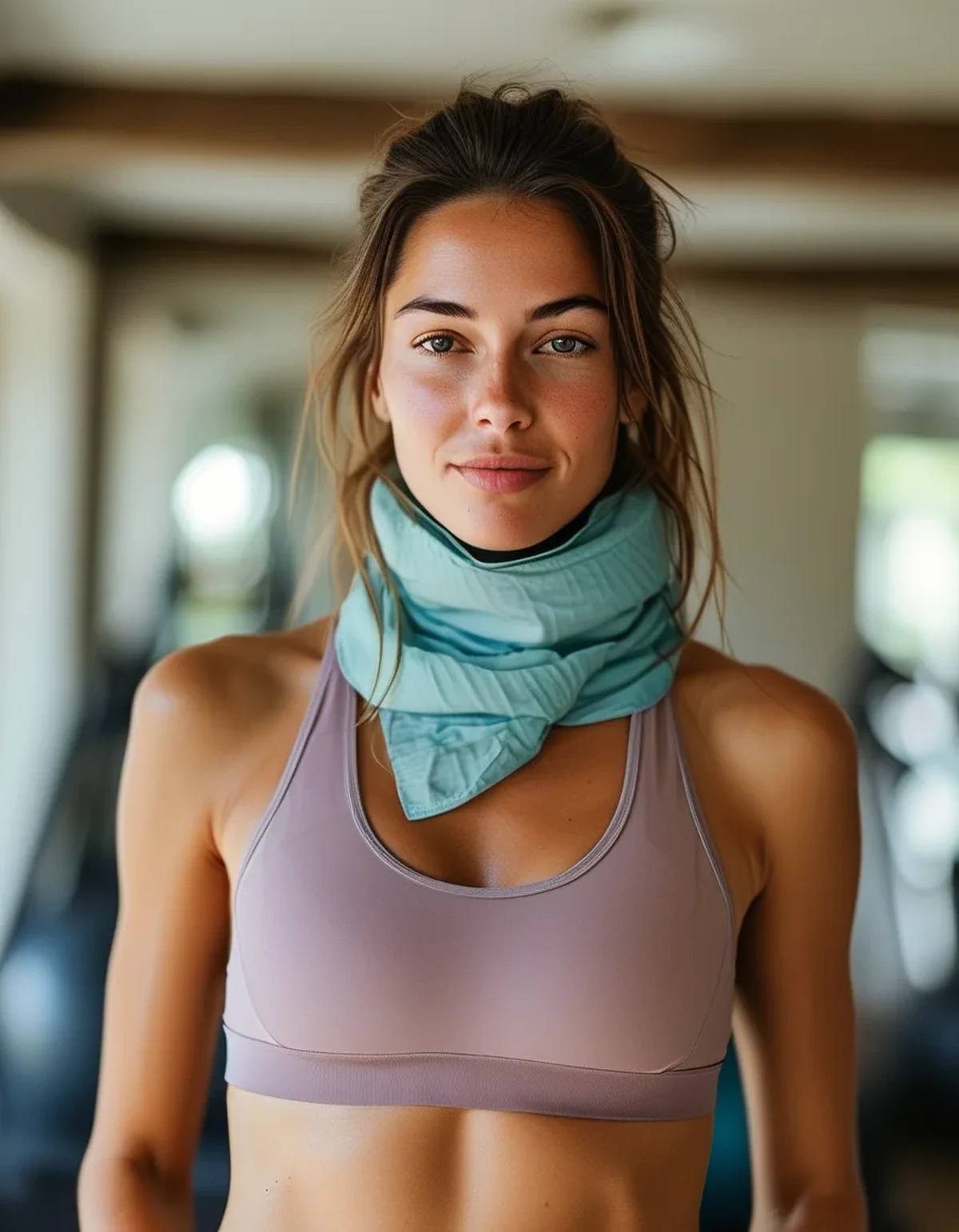
- A phase-change cooling neck wrap. Works in any humidity, recharges in a fridge or in cool water, and the neck is one of the most effective cooling sites because of the blood vessels near the surface.
- A high-ventilation training top with mesh at the underarm and spine.
- A small clip fan for desk or gym bag. Unglamorous and the most effective item on this list for indoor use.
- Moisture-wicking socks in merino or synthetic. Feet are a significant heat exchange site and cotton socks undo a lot of other effort.
- A packable ultralight shell for the ten minutes you actually do get cold, so you are not carrying a heavy layer all day.
Total cost is modest and it replaces the seasonal buy-and-abandon cycle that most cooling gear falls into.
How do I handle the environments I do not control?
This is usually the harder half of the problem, because offices, gyms, and other people’s homes are set for someone else.
Offices. A small USB fan under a desk is the highest-return intervention. Position it for airflow across your forearms and neck rather than at your face. Keep a phase-change wrap in an office fridge if there is one.
Cars. Direct vents at your torso rather than your face, and consider a seat cover with airflow channels - car seats trap heat against your back, which is a large surface area.
Gyms. Train near an air handler or fan where possible, and bring your own. Pre-cooling before a session - 10 to 15 minutes with a cooling wrap or a cold drink - has reasonable evidence for improving performance in heat and it applies indoors too.
Sleep. Bedroom temperature around 65 to 68F is the commonly recommended range, and for people who run hot the lower end plus a fan usually works better than more bedding adjustments. Breathable bedding matters as much as the thermostat.
Travel. A merino base plus a packable shell handles a hot terminal and a cold cabin without carrying two wardrobes.
What about the seasonal transition specifically?
The next six weeks are the hardest stretch of the year for people who run hot, and it is worth naming why.
Outdoor temperatures are dropping, but indoor heating has not started and buildings retain summer heat. At the same time, everyone around you starts dressing warmer and adjusting thermostats upward. The result is an environment that gets warmer relative to what you need, precisely when the calendar says it should be cooling.
The adjustment that helps most is layering downward rather than upward: start from a light base you are comfortable in at the warmest point of the day, and add a removable shell for mornings and evenings. Most people do the opposite - they start from a warm layer and are stuck.
Also worth adjusting now: your hydration probably drops in fall because you feel less thirsty in cooler air, while your sweat rate has not fallen proportionally. Mild dehydration reduces your capacity to dissipate heat, which makes running hot worse. Keeping intake steady through September is a small change with a real effect.
And retire the evaporative gear until next summer. In fall humidity it is doing nothing but making you damp.
FAQ: Running Hot Questions, Answered
Is running hot a sign of something medical?
Usually not on its own. But new or worsening heat intolerance with sweating changes, weight change, palpitations, or fatigue is worth discussing with a doctor - thyroid function and perimenopause are both common explanations. This is general information, not medical advice.
Do cooling towels work at all?
They work well in hot dry air and poorly in cool or humid air. For someone who runs hot year round, they are a summer-only tool.
Where is the most effective place to cool?
The neck, wrists, and the palms of the hands have high blood flow near the surface. Palm cooling in particular has surprisingly good research support for reducing core temperature during exercise.
TL;DR:
- Chronic heat is usually higher metabolic heat production plus a lower sweating threshold, not a problem to fix.
- Evaporative gear - towels, misting vests - fails in cool humid air. Use conduction and airflow instead.
- Lightweight merino base layers regulate in both directions and beat cotton in every condition.
- A six-item year-round kit: two merino bases, a phase-change neck wrap, a ventilated top, a clip fan, wicking socks, and a packable shell.
- Fall is the hardest season - buildings hold summer heat while everyone else turns thermostats up.
- Keep hydration steady through September even though you feel less thirsty.
The shift worth making is from buying a cooling product each July to owning a base layer system that works in every month. This is general information, not medical advice.
See It in Motion
Seen here: UPF 50+ Racerback Yoga Tank Top — shop it on bubblelime.com
Keep Reading
This article is for general informational and styling purposes only. Fit, sizing, and product availability may vary.