The Complete Guide to Cooling Gear for Heated Indoor Gyms
Quick Answer: Indoor gyms in autumn and winter are frequently warmer and more humid than the outdoor summer conditions people bought cooling gear for, and high humidity is what actually defeats your cooling system. Keep a cooling towel, a fan strategy, and moisture-wicking layers in rotation year-round rather than storing them. The main changes for indoor use: prioritise evaporative and airflow-based cooling over insulated products, drop layers immediately on arrival rather than warming up in outdoor clothing, and treat neck, wrists, and face as the highest-value cooling sites.
You trained outdoors all summer in thirty degrees and coped. Now you’re in a heated room at twenty-two with no breeze, in a long-sleeve top you wore in from the cold, and you’re more overheated than you were in August.
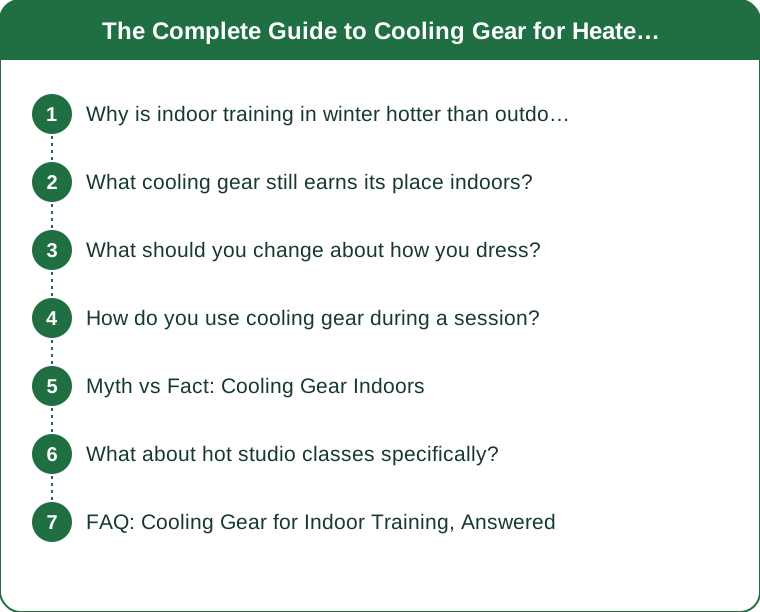
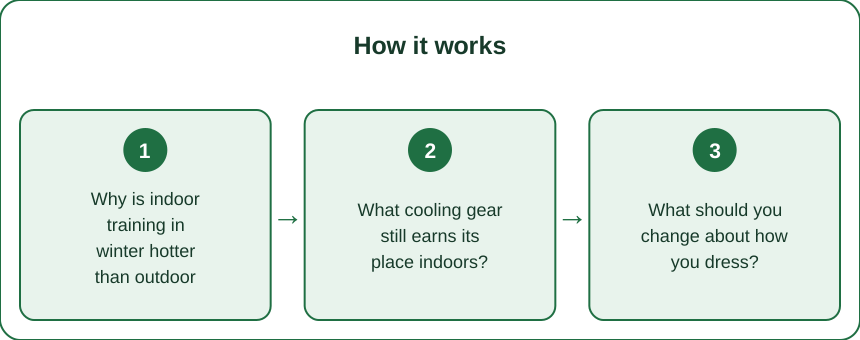
Why is indoor training in winter hotter than outdoor training in summer?
Humidity, not temperature, is what defeats cooling. Your body loses most of its exercise heat through sweat evaporation. When the surrounding air is already humid, evaporation slows dramatically and sweat runs off you without cooling you. A packed indoor gym with the heating on is a high-humidity environment.
There’s no air movement. Outdoors, even a slight breeze substantially improves evaporative cooling. Indoors, still air sits against your skin as a saturated boundary layer, and that layer is what a fan removes.
Heating systems are set for people sitting still. Gyms and studios are heated for comfort on arrival, not for someone mid-interval. The setpoint that feels right walking in is far too warm twenty minutes into a session.
Crowds add substantial heat. A busy class or a full gym floor in January generates real heat load in an enclosed space, and January is the busiest month of the year in most gyms.
You arrive overdressed and stay that way. Walking in from the cold in layers and then keeping them on through the warm-up is one of the most common causes of indoor overheating, and it’s entirely self-inflicted.
And your heat acclimatisation fades. Adaptations built over a hot summer decline over weeks once the stimulus stops, so by midwinter you handle heat measurably less well than you did in August - which makes a warm gym feel worse than the numbers suggest.
What cooling gear still earns its place indoors?
Evaporative cooling towels remain the highest-value item. A damp towel on the neck between sets works by evaporation, and it works indoors provided the room isn’t saturated. Cheap, packable, reusable, and effective in the exact scenario indoor training creates.
A personal fan or a chosen spot near airflow. Moving air is the single most effective intervention for indoor heat, because it strips away the saturated layer of air against your skin. Training near a fan, or bringing a small clip-on one, does more than any garment.
Moisture-wicking fabrics over cotton. Cotton absorbs sweat and holds it against the skin, staying wet and heavy. Technical fabrics move moisture to the surface where it can evaporate - which is the whole mechanism you’re trying to support.
Cold water, ideally with ice. Drinking cold fluid provides a real if modest cooling effect and is the easiest intervention available. A bottle you’ll actually drink from beats an optimised one you leave in the bag.
Wrist and neck cooling for targeted relief. These sites have blood vessels close to the surface and are the standard targets for rapid cooling. A cold flannel on the wrists between sets is genuinely effective and costs nothing.
And cooling vests are largely unnecessary indoors. They’re designed for pre-cooling before hot outdoor endurance events. In a gym, where you can simply remove clothing and stand near a fan, they’re solving a problem you don’t have.
What should you change about how you dress?
Strip the outdoor layers before you warm up, not after. The single most common indoor overheating mistake is keeping a hoodie on through the warm-up because you’re cold on arrival. Being slightly cold for the first three minutes is correct.
Dress for ten minutes into the session. The standard rule for outdoor exercise applies indoors too, and indoors there’s no wind chill to account for - so dress lighter than instinct suggests.
Use a removable top layer rather than a warm base. A light zip-through you can take off in one movement, over a training top you’re happy in for the whole session, beats a single warm garment you’re stuck with.
Choose lighter colours and looser cuts for hot rooms. Loose fabric allows air movement against the skin; compression fabrics reduce it. This is a genuine trade-off if you also want compression benefits.
Bring a change of top for long sessions. A soaked top stops wicking effectively. Changing halfway through a long session or a class-then-weights double is a small logistical thing with a disproportionate effect.
And plan the exit. A dry layer for the walk home matters more in autumn than in summer - leaving a warm gym in a wet top into a cold evening is genuinely unpleasant and worth thirty seconds of packing.
How do you use cooling gear during a session?
Cool between efforts, not during them. The rest interval is when cooling changes what you can do in the next set. Applying a cold towel mid-set is impractical and mid-effort cooling is largely a comfort measure.
Target neck, wrists, and face first. These are the standard sites for rapid perceived cooling, and face cooling in particular has a strong effect on how hot you feel, which matters because perceived exertion drives when you stop.
Re-wet evaporative products regularly. A cooling towel works while it’s evaporating. Once it’s warm and dry it’s just a towel, and most people leave it far too long between soaks.
Pre-cool before hard indoor intervals. A few minutes of cooling before a hard session can extend how long you work before heat becomes limiting. It’s a technique borrowed from hot-weather sport and it transfers to a hot studio.
Drink to thirst and account for the humidity. High-humidity environments produce heavy sweat losses that don’t evaporate, so it’s easy to underestimate how much you’ve lost. Weighing yourself before and after a long session once is an instructive one-off exercise.
And use cooling to extend quality, not to push through. If you’re relying on cooling to keep going in a session that’s making you feel unwell, the correct response is to stop rather than to cool harder.
Myth vs Fact: Cooling Gear Indoors
Myth: Cooling gear is a summer purchase. Fact: heated indoor spaces in winter are frequently more humid and less ventilated than summer outdoors. The gear belongs in year-round rotation, not in a box.
Myth: Cooling towels lower your core temperature significantly. Fact: their main effect is on skin temperature and perceived heat, which is genuinely valuable because perceived exertion determines when most people stop - but it’s not the same as meaningful core cooling.
Myth: Sweating more means you’re cooling better. Fact: sweat only cools you when it evaporates. In a humid room, heavy sweating that runs off you provides very little cooling while still costing you fluid.
Myth: You should train in extra layers to sweat more. Fact: this raises heat strain without any benefit for fat loss, and it’s a genuine risk in a warm humid room. Weight lost this way is fluid, and it returns.
Myth: A fan is cheating. Fact: airflow is the most effective cooling intervention available indoors, and being able to work harder for longer is the point of training.
Myth: If you’re not outdoors, heat isn’t a safety issue. Fact: heat illness can occur indoors, particularly in hot studio classes. This is general information, not medical advice - dizziness, nausea, confusion, headache, or stopping sweating are all reasons to stop immediately and seek help.
What about hot studio classes specifically?
Hot yoga and heated studio classes are a different category. These are deliberately heated environments, frequently to substantial temperatures with added humidity, and they warrant more preparation than an ordinary gym session.
Hydrate before, not just during. Arriving already well hydrated matters more than what you drink in the room, because absorption during intense heat exposure is limited.
Cotton is the wrong choice entirely. In a genuinely hot humid room, cotton becomes saturated and heavy within minutes. Technical fabrics with minimal coverage are the standard for a reason.
Bring two towels. One for the mat and one for you. It sounds excessive until the first class.
Position yourself away from heaters if you’re new. Room temperature varies considerably by position, and the back or edges are usually more forgiving for a first few sessions.
And take the acclimatisation period seriously. Adapting to heat takes repeated exposures over a week or two. The first few classes are the hardest and the ones where people most often overdo it. Anyone pregnant, with a heart condition, with blood pressure issues, or on medication affecting heat regulation should get medical advice before starting hot classes rather than after.
FAQ: Cooling Gear for Indoor Training, Answered
Should I use cooling gear in winter?
Yes, if you train indoors. Heated gyms and studios in winter are frequently warmer and considerably more humid than summer outdoor conditions, and humidity is what actually limits your cooling.
Why do I overheat more in the gym than I did outside in summer?
Still, humid indoor air prevents sweat evaporating, there’s no breeze to strip the saturated air off your skin, and most people keep outdoor layers on through the warm-up. Your summer heat acclimatisation also fades over weeks.
Do cooling towels actually work indoors?
They work by evaporation, so they work well in a warm room that isn’t fully saturated - and they need re-wetting regularly. Their main effect is on skin temperature and how hot you feel, which is what determines when most people stop.
Where should I apply cooling for the fastest effect?
Neck, wrists, and face. These sites have blood vessels close to the surface, and face cooling in particular has a strong effect on perceived heat.
Is a cooling vest worth it for gym training?
Generally not. Cooling vests are designed for pre-cooling before hot outdoor endurance events. Indoors you can remove clothing and use airflow, which solves the problem more cheaply.
When is overheating a safety issue rather than a comfort one?
Dizziness, nausea, confusion, severe headache, or stopping sweating are all reasons to stop immediately, get cool, and seek help. Heat illness happens indoors as well as outdoors, particularly in heated studio classes.
TL;DR:
- Heated indoor gyms in winter are often more humid and less ventilated than summer outdoors, and humidity is what defeats cooling.
- Keep cooling towels, wicking fabrics, and a fan strategy in year-round rotation rather than storing them in September.
- Strip outdoor layers before the warm-up, not after - being slightly cold for three minutes is correct.
- Cool between efforts at the neck, wrists, and face, and re-wet evaporative products regularly or they stop working.
- Skip the cooling vest indoors, never train in extra layers to sweat more, and treat dizziness or nausea as a stop signal.
Your summer heat acclimatisation fades over weeks. By January a warm gym is harder than the thermometer suggests.
See It in Motion
Seen here: High Waist Embossed Yoga Leggings with Side Pockets — shop it on bubblelime.com
Keep Reading
This article is for general informational and styling purposes only. Fit, sizing, and product availability may vary.