How Pre-Cooling Vests Actually Work and When They're Worth Using Before a Hot-Weather Workout
Pre-cooling vests show up at elite outdoor events often enough to raise the question of whether they’re worth using for a regular hot-weather workout, or whether the benefit is mostly relevant at a performance level most people aren’t training at. Here’s the actual mechanism behind pre-cooling, and where the real-world benefit genuinely applies.

The Actual Mechanism Behind Pre-Cooling
How it works: the the-lowering-core-temperature-before-exercise-extends-the-time-before-hitting-a-critical-heat-threshold (the starting a workout from a lower baseline core temperature giving the body measurably more time before reaching the internal temperature at which performance and safety both start to decline in heat — the a-lower-starting-temperature-delays-when-the-critical-heat-threshold-gets-reached-not-just-how-hot-it-feels), and the reframe (the benefit being a delayed timeline to a physiological limit, not simply a subjective feeling of being less hot at the start)).

Where the Real-World Benefit Genuinely Applies
The practical answer: the the-the-benefit-is-most-measurable-in-longer-duration-high-intensity-heat-exposure-not-short-sessions (the research on pre-cooling showing its clearest benefit specifically in sustained, intense efforts in genuine heat, with much smaller or negligible measured benefit for a short or moderate-intensity session — the duration-and-intensity-of-the-planned-session-determines-whether-pre-cooling-is-actually-worth-it), the the-for-a-short-or-moderate-hot-weather-workout-simple-hydration-and-timing-adjustments-produce-more-benefit-per-effort-than-a-cooling-vest (the a shorter or lower-intensity session gaining comparatively little from delaying a heat threshold that likely wouldn’t be reached anyway, making basic hydration and workout timing a better-targeted investment of effort — the for-most-regular-workouts-hydration-and-timing-beat-a-cooling-vest-on-effort-to-benefit-ratio), and the frame (the vest being a genuinely useful tool specifically for sustained high-intensity heat exposure, while for most everyday hot-weather workouts, simpler adjustments deliver more benefit for the effort involved).
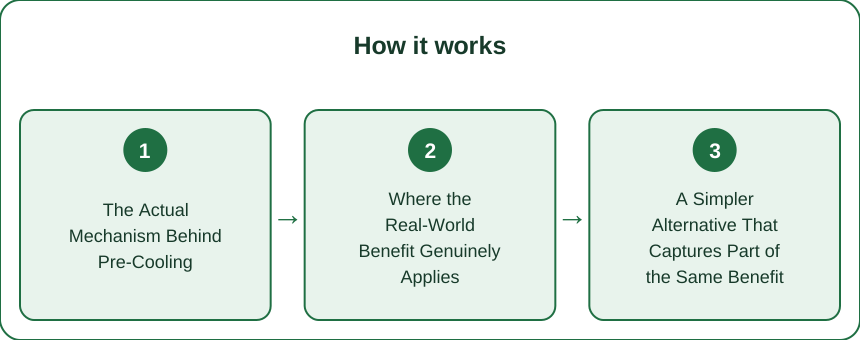
A Simpler Alternative That Captures Part of the Same Benefit
The lower-effort option: the the-a-cold-towel-on-major-pulse-points-before-a-session-delivers-some-of-the-same-cooling-effect-with-far-less-equipment (the applying a cold, damp towel to the neck or wrists before a shorter workout providing a smaller but real version of the same core-temperature-lowering effect without requiring a dedicated cooling vest — the a-cold-towel-approach-captures-a-partial-version-of-the-same-mechanism-at-far-lower-cost-and-effort), and the frame (the towel option being a reasonable middle ground for a moderate-intensity session that doesn’t justify a full cooling vest but still benefits from some pre-cooling effect).
Pre-cooling vests work by lowering core body temperature before exercise starts, which genuinely delays how long it takes to reach the internal heat threshold where both performance and safety begin to decline — a real physiological mechanism, not just a subjective feeling of being less hot at the outset. That benefit shows up most clearly in sustained, high-intensity heat exposure, which is why elite endurance events use them; for a shorter or moderate-intensity hot-weather workout, the threshold likely wouldn’t be reached anyway, making basic hydration and smarter workout timing a better-targeted use of effort than a cooling vest.
See It in Motion
Seen here: Racerback Tank Top - White — shop similar styles on bubblelime.com
Keep Reading
This article is for general informational and styling purposes only. Fit, sizing, and product availability may vary.