Why Your Gym Bag Smells Like Mildew Even Though Your Cooling Gear Looks Clean
Quick Answer: Evaporative cooling gear (towels, vests, wraps) relies on water-retaining polymer or fabric that stays damp for hours after use, and that prolonged dampness inside a closed gym bag is exactly the environment mildew needs — a rinse with plain water doesn’t remove the bacteria causing the smell, only a proper wash with detergent (or diluted vinegar) does.
The smell keeps coming back because most people rinse the gear and let it dry folded in the bag, which is the opposite of what actually needs to happen.
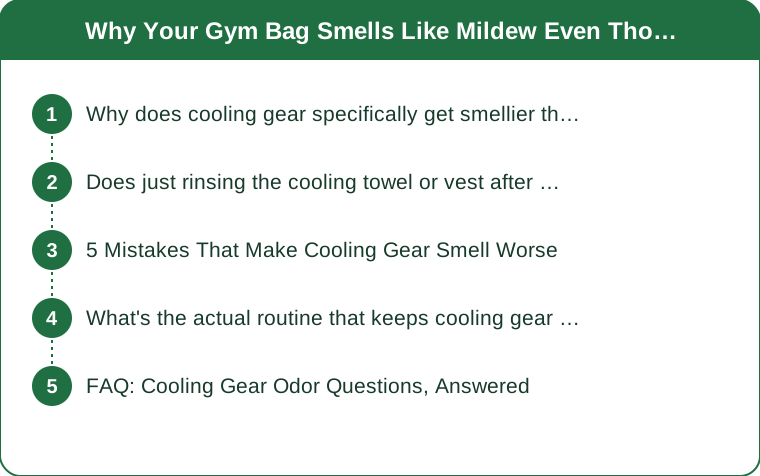
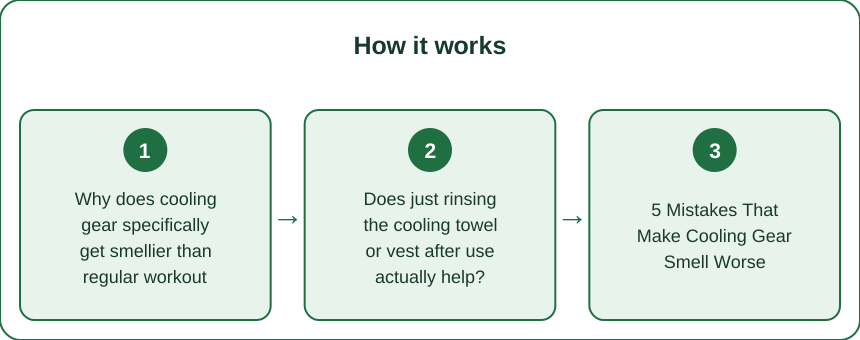
Why does cooling gear specifically get smellier than regular workout clothes?
Cooling towels and vests are designed to hold water for hours, which is exactly what makes them effective — but that same water retention creates a longer window for bacteria to grow compared to moisture-wicking fabric that’s built to dry out quickly.
Regular sweat-wicking gear pushes moisture to the surface and air-dries relatively fast, while cooling gear is engineered to do the opposite, so odor-causing bacteria get significantly more time to multiply.
Does just rinsing the cooling towel or vest after use actually help?
Rinsing removes surface salt and visible residue but doesn’t kill the bacteria already established in the fabric fibers, which is why a rinsed-and-air-dried towel can still smell musty the next time you unpack it, even though it looked clean when you put it away.
A proper wash cycle (or a vinegar soak) is needed periodically to actually reset the fabric, not just refresh it between uses.
5 Mistakes That Make Cooling Gear Smell Worse
Mistake 1: Folding it damp and packing it back into a closed gym bag, sealing in moisture with zero airflow.
Mistake 2: Only rinsing with water instead of an occasional actual wash with detergent or a vinegar solution.
Mistake 3: Using fabric softener, which can coat the fibers and actually reduce the gear’s evaporative cooling performance.
Mistake 4: Storing it in a plastic bag or sealed container between uses, which traps humidity instead of letting it escape.
Mistake 5: Waiting until it smells bad to wash it, by which point bacteria has already built up significantly in the fibers.
What’s the actual routine that keeps cooling gear odor-free long term?
Hand-wash or machine-wash on a gentle cycle every 5-7 uses with a mild detergent (no fabric softener), and always lay it fully flat and unfolded to air-dry completely before storing it — this single drying step matters more than most people expect, since folding it while even slightly damp restarts the bacteria cycle.
A monthly soak in a mild vinegar-water solution (roughly one part vinegar to four parts water for 20-30 minutes) also helps reset fabric that’s started to hold onto odor between regular washes.
FAQ: Cooling Gear Odor Questions, Answered
Can I put cooling towels or vests in the dryer?
Most evaporative cooling gear should air-dry only — heat from a dryer can damage the polymer or fabric technology that gives it its cooling function, so check the care label before machine drying.
Is it normal for cooling gear to lose some of its cooling effectiveness over time?
Some gradual reduction in performance is normal with fabric-based cooling gear, but fabric softener buildup and incomplete drying between uses accelerate that decline faster than expected.
Does a stronger detergent get rid of stubborn odor faster?
A stronger wash helps, but consistency (washing every 5-7 uses rather than waiting for the smell) matters more than detergent strength for preventing the odor from building up in the first place.
TL;DR:
- Cooling gear’s water-retaining design makes it more odor-prone than regular moisture-wicking workout clothes
- Rinsing alone doesn’t kill the bacteria causing the smell — a real wash or vinegar soak is needed periodically
- Fully unfolding and air-drying gear before storage matters more than most people realize
- A wash every 5-7 uses, skipping fabric softener, keeps most cooling gear odor-free long term
The smell isn’t a sign the gear is defective — it’s just a maintenance routine most people skip until it’s already a problem.
See It in Motion
Seen here: Racerback Tank Top - White — shop similar styles on bubblelime.com
Keep Reading
This article is for general informational and styling purposes only. Fit, sizing, and product availability may vary.