The Frozen Water Bottle: Summer's Most Underrated Multi-Tool
Quick Answer: A frozen water bottle does at least five summer jobs: it turns a fan into a makeshift cooler, chills pulse points fast after heat exposure, replaces an ice pack in a lunch bag or beach cooler, keeps drinking water cold for 6+ hours, and costs nothing. Fill to 80% so ice expansion doesn’t split the bottle, and keep three in permanent freezer rotation.
There’s an entire aisle of neon cooling gadgets in every store from May to September. Misting fans. Cooling towels. Neck rings with mysterious gel.
Before you buy any of it, check what your freezer can already produce for free.
The frozen water bottle holds a humble throne in summer gear: five jobs, zero cost, and it recycles itself into a drink at the end.
Does Putting a Frozen Bottle in Front of a Fan Actually Work?
Yes, modestly — and the “modestly” is worth understanding so you set the right expectations.
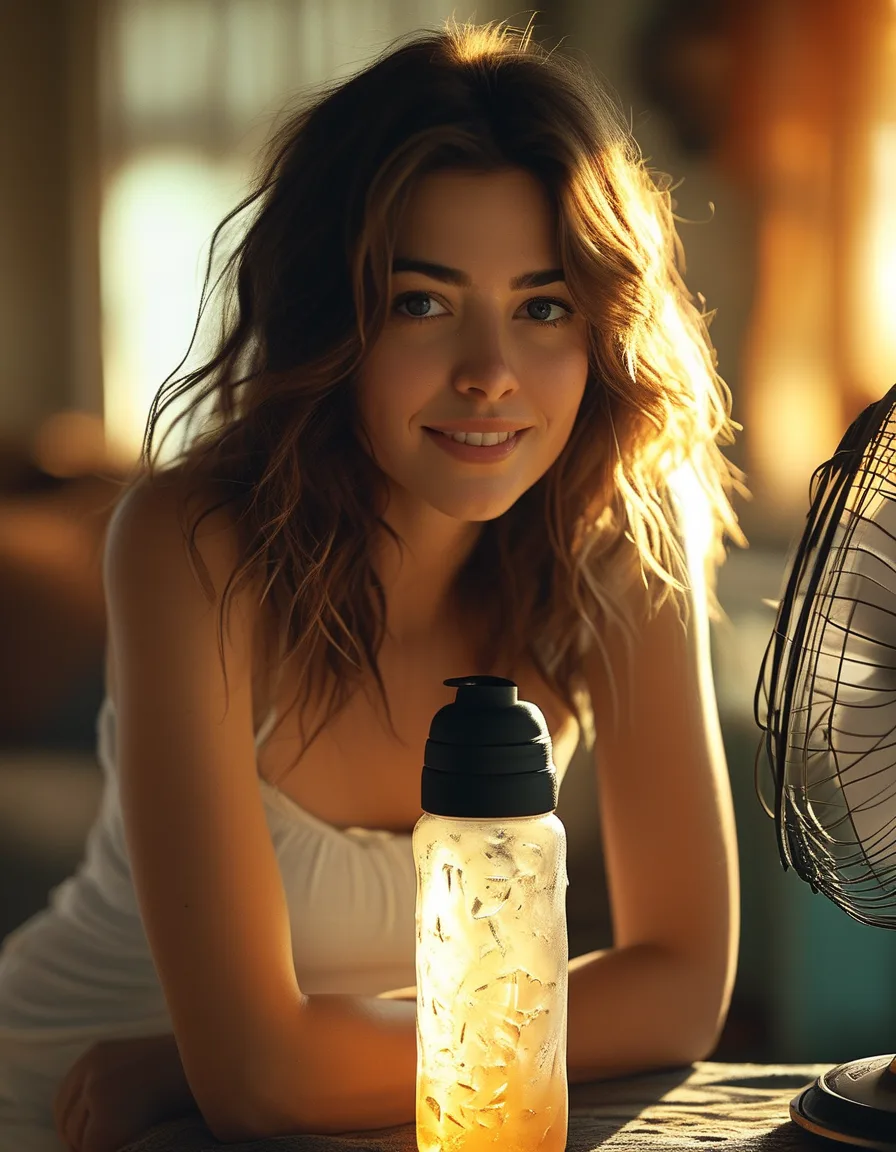
Two frozen bottles placed directly in front of a fan give you air that’s genuinely a few degrees cooler as it passes over them, plus a small amount of condensation-driven evaporative effect. In a small enclosed space — a bedroom, a desk nook, a tent — that’s noticeable.
What it won’t do: cool a whole open-plan living room, or work well in very humid air where evaporation stalls. Physics grade: B+. Cost: zero.
How to set it up properly: place a shallow tray under the bottles (condensation is real and your desk won’t enjoy it), position them 6–12 inches in front of the fan, and use 2–3 bottles rather than one. The effect lasts roughly 60–90 minutes before the bottles need swapping, which is exactly why you keep a rotation going.
Perfect for the desk, the bedroom, and the it’s-only-June-why concert of despair.
Where Should You Put a Cold Bottle to Cool Down Fastest?
Pulse points — wrists, the sides of the neck, inner elbows, and behind the knees.
Blood runs close to the surface at those spots, so cooling there drops the temperature of blood heading back to your core. It’s meaningfully faster than pressing a cold bottle against, say, your stomach.
The practical protocol after a hot walk or workout: hold the bottle against the inside of each wrist for 60 seconds, then against the sides of the neck for another 60. Most people feel the shift within two minutes.
One caution worth stating: don’t press a fully frozen bottle directly against bare skin for extended periods. Wrap it in a thin cloth if it’s rock solid, or wait until there’s a layer of meltwater. Frost damage on skin is uncommon but not impossible.
This beats standing in the freezer aisle. Though we respect that too.

Can a Frozen Water Bottle Replace an Ice Pack?
For most purposes, yes — and it’s better in one specific way.
A frozen bottle chills a lunch bag or beach cooler just as effectively as a gel pack of similar mass. It keeps sandwiches safely cold for roughly 4–6 hours in an insulated bag, and longer in a proper cooler.
The advantage: as it melts, it becomes ice-cold drinking water. A gel pack becomes a warm gel pack you have to carry home. Self-consuming infrastructure — the circular economy of July.
Where a gel pack still wins: flat, flexible shapes that mold around food, and anything requiring a very long hold time. Gel packs stay frozen slightly longer per unit weight because of their formulation.
For a lunch bag, a beach day, or a picnic, the bottle wins on every metric that matters.
What Nobody Tells You About Freezing Water Bottles
- Fill to 80%, not the brim. Water expands roughly 9% when it freezes. A full bottle either splits its seams or deforms permanently, and bottles remember grudges.
- Freeze at an angle. Lay the bottle on its side or tilt it in the freezer and the ice forms along the length rather than as one solid plug at the bottom. Meltwater becomes drinkable within 20 minutes instead of two hours.
- Squeeze bottles beat rigid ones. Soft-sided bottles flex with the ice instead of cracking. Rigid stainless steel is the worst choice — the ice has nowhere to go and the vacuum seal can fail permanently.
- Freeze half, top up with water. Freeze a bottle only half full lying on its side, then fill with cold water before you leave. You get cold water immediately and a slow-melting ice core.
- Three in rotation, always. One in use, one refreezing, one ready. The bottle brigade should never be caught unfrozen during a heatwave — this is the rule that separates people who use this hack once from people who use it all summer.
How Long Does a Frozen Water Bottle Stay Cold?
Depends entirely on the environment:
- In an insulated cooler: 8–12 hours, often longer with other cold items packed around it
- In an insulated lunch bag: 4–6 hours
- In a backpack at room temperature: 2–3 hours before fully melted
- In direct sun on a beach towel: 45–90 minutes, which is why it goes in the bag
A 32oz bottle stays cold roughly twice as long as a 16oz one, so size up if the day is long. Two smaller bottles cool a bag more evenly than one large one, though — surface area does the work.
For workouts, a bottle frozen half-full and topped with water gives you cold drinking water for a full 60–90 minute session, which is where most gym bottles fail.
Frequently Asked Questions
Is it safe to freeze plastic water bottles?
Yes. The claim that freezing plastic releases dioxins is a long-debunked internet rumor — dioxins are not present in food-grade plastic and are not released by cold. The real risk is mechanical: single-use bottles can split at the seams if overfilled. Use reusable BPA-free bottles and fill to 80%.
Can you freeze a stainless steel water bottle?
Not recommended. Steel doesn’t flex, so expanding ice has nowhere to go, which can dent the inner wall or break the vacuum insulation permanently. Insulated steel bottles also resist temperature transfer in both directions, so they make poor ice packs anyway.
How do you stop a frozen bottle from sweating everywhere?
Wrap it in a thin dish towel or a sock, or use a neoprene bottle sleeve. The condensation is unavoidable — warm humid air meeting a cold surface — so the answer is absorbing it rather than preventing it. A tray underneath handles the fan setup.
Does a frozen bottle in front of a fan work in humid weather?
Less well. Part of the cooling comes from evaporation, which slows dramatically in high humidity. In humid climates you’ll still get the direct chilled-air effect but noticeably less overall benefit — running a dehumidifier alongside makes a bigger difference than adding more bottles.
TL;DR:
- Two bottles in front of a fan cools a small room noticeably for 60–90 minutes. Use a tray for condensation.
- Pulse points — wrists, neck, inner elbows — cool you fastest. Wrap the bottle if it’s rock solid.
- It replaces an ice pack for 4–6 hours in a lunch bag and turns into cold drinking water afterward.
- Fill to 80% and freeze on its side. Squeeze bottles yes, stainless steel no.
- Keep three in rotation: one in use, one refreezing, one ready.
See It in Motion
Seen here: Racerback Tank Top - White — shop similar styles on bubblelime.com
Keep Reading
This article is for general informational and styling purposes only. Fit, sizing, and product availability may vary.