Why the Same Cooling Gear Works Great in Dry Heat and Barely Helps in Humidity
Cooling towels and evaporative cooling gear that work impressively in one climate can feel almost useless in another, and it’s not inconsistent product quality — it’s a direct, predictable consequence of how evaporative cooling technology actually works and its dependence on ambient humidity. Here is the mechanism behind that gap and how to choose cooling gear correctly depending on the actual conditions.

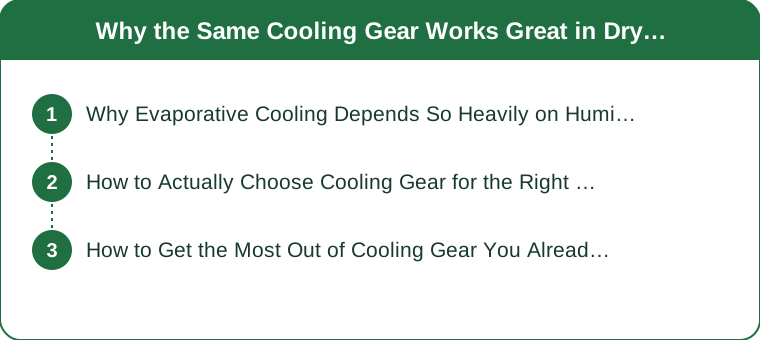
Why Evaporative Cooling Depends So Heavily on Humidity
The physics behind it: the evaporative-cooling-relies-on-moisture-actually-evaporating-off-the-fabric (the core mechanism behind cooling towels and most evaporative cooling gear being the cooling effect that happens specifically as water evaporates off the fabric surface, per the evaporative-cooling-gear-how-it-actually-works-guide logic — the the-entire-mechanism-depends-on-active-evaporation-not-just-being-wet), the the-humid-air-is-already-close-to-saturated-with-moisture (the air’s capacity to absorb additional evaporated moisture being directly limited by how much moisture it already holds, and humid air holds much more than dry air — the humid-air-has-less-room-to-absorb-more-moisture), the the-less-room-for-evaporation-means-less-cooling-effect-full-stop (the evaporation rate slowing dramatically in already-humid air, which directly and proportionally reduces the cooling effect the product can actually produce — the slower-evaporation-directly-equals-less-cooling-not-just-slightly-less), the the-dry-heat-conditions-are-where-evaporative-cooling-performs-at-its-best (the dry air’s much greater capacity to absorb moisture allowing faster evaporation and therefore a stronger, more noticeable cooling effect, the ideal condition for this cooling category specifically — the dry-heat-is-the-genuinely-ideal-condition-for-this-technology), the the-this-isnt-a-product-defect-its-a-fundamental-physical-limit-of-the-entire-category (the humidity dependence applying to the underlying evaporative cooling mechanism itself, meaning it affects essentially every product in this category rather than being a flaw specific to one brand or product — the its-a-category-wide-physics-limit-not-a-specific-product-flaw), and the reframe (the humidity-dependent performance gap as an expected, physics-based limitation of evaporative cooling technology specifically, not evidence of inconsistent or lower product quality).

How to Actually Choose Cooling Gear for the Right Conditions
What to look for by climate: the for-dry-climates-evaporative-cooling-towels-and-gear-remain-a-genuinely-strong-choice (the traditional evaporative cooling towels and gear continuing to be a highly effective, low-cost option specifically in dry heat conditions, per the how-to-stay-cool-during-summer-workouts-guide logic — the keep-using-evaporative-cooling-confidently-in-dry-conditions), the the-for-humid-climates-look-toward-phase-change-material-cooling-instead (the cooling products using phase-change materials, which absorb and release heat through a different mechanism not dependent on evaporation rate, generally performing more consistently regardless of humidity — the phase-change-cooling-doesnt-share-the-same-humidity-weakness), the the-ice-and-direct-cold-based-cooling-also-bypasses-the-humidity-limitation (the frozen or ice-pack-based cooling gear, similarly not dependent on evaporation, providing a humidity-independent cooling option worth considering specifically for humid-climate use — the direct-cold-based-cooling-sidesteps-the-humidity-problem-entirely), the the-fan-assisted-cooling-gear-can-partially-help-evaporative-products-in-humid-conditions (the adding airflow via a small fan specifically increasing the local evaporation rate even in humid ambient air, partially offsetting the humidity limitation for evaporative products already owned — the added-airflow-can-partially-rescue-evaporative-cooling-in-humid-conditions), the the-know-your-typical-training-or-work-environment-before-investing-in-a-specific-cooling-category (the checking typical local humidity levels for the conditions cooling gear will actually be used in before investing, rather than assuming any cooling product performs the same everywhere — the match-the-purchase-to-your-actual-typical-conditions-before-buying), and the frame (the smart choice as staying with evaporative cooling confidently in dry climates, switching toward phase-change or ice-based cooling for humid climates, considering fan-assisted airflow to partially rescue evaporative products already owned, and checking typical local humidity before investing in a specific cooling category).
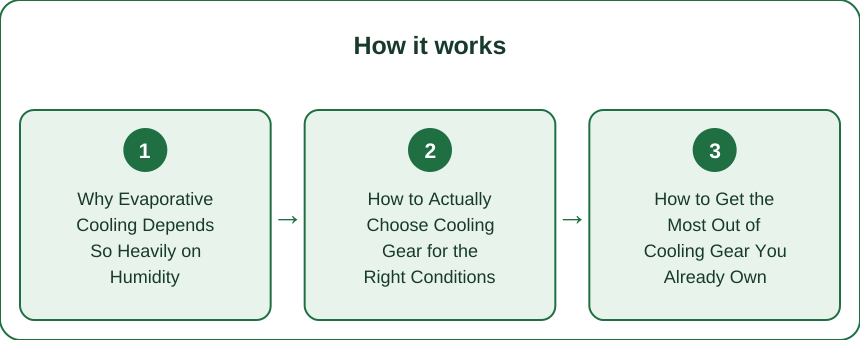
How to Get the Most Out of Cooling Gear You Already Own
Working with what you have: the pre-cool-more-aggressively-in-humid-conditions-to-compensate (the pre-cooling routine, per the pre-cooling-before-a-hot-workout-guide logic, becoming proportionally more valuable in humid conditions specifically because in-session evaporative cooling will underperform there — the pre-cooling-matters-more-when-in-session-cooling-will-be-weaker), the the-re-wet-evaporative-gear-more-frequently-in-humid-conditions (the shorter effective cooling window in humid air meaning evaporative towels need re-wetting more often to maintain any meaningful effect, rather than assuming the same re-wetting schedule that works in dry conditions — the re-wet-more-often-in-humid-air-not-on-the-same-schedule-as-dry-conditions), the the-combine-evaporative-gear-with-a-fan-or-moving-air-source-when-possible (the pairing existing evaporative cooling gear with any available moving air source specifically when working out or being active in humid conditions — the pair-with-airflow-to-partially-offset-the-humidity-limitation), the the-set-realistic-expectations-rather-than-assuming-the-product-is-broken (the understanding that reduced performance in humidity is expected physics, not a malfunctioning product, preventing the frustration of assuming something is wrong with gear that’s actually working as well as physics allows in those conditions — the realistic-expectations-prevent-mistaking-normal-physics-for-a-broken-product), the the-consider-supplementing-with-a-humidity-independent-cooling-method-for-genuinely-humid-regular-conditions (the adding an ice-based or phase-change cooling item specifically for regularly humid conditions rather than relying solely on evaporative gear that structurally underperforms there — the supplement-dont-necessarily-fully-replace-existing-evaporative-gear), and the frame (the way to get the most from existing gear as pre-cooling more aggressively, re-wetting more frequently in humid conditions, pairing with any available airflow, setting realistic performance expectations tied to actual humidity, and supplementing with a humidity-independent option for regularly humid conditions — working with the physics rather than assuming the product itself is the problem).
Evaporative cooling towels and gear depend fundamentally on water actively evaporating off the fabric surface to produce their cooling effect, and humid air, already holding much more moisture than dry air, has far less capacity to absorb additional evaporated moisture — which directly and proportionally slows the evaporation rate and reduces the cooling effect, a physics limitation affecting essentially the entire evaporative cooling category rather than any specific product’s quality. The smart choice by climate is staying with evaporative cooling confidently in dry heat where it performs at its best, switching toward phase-change material or ice-based cooling gear for humid climates since neither depends on evaporation rate, and considering a small fan to increase local airflow and partially rescue evaporative products already owned when used in humid conditions. Getting the most from existing gear in humid weather means pre-cooling more aggressively beforehand since in-session cooling will underperform, re-wetting evaporative towels more frequently than the schedule that works in dry conditions, pairing gear with any available moving air source, setting realistic expectations so reduced humid-weather performance doesn’t read as a broken product, and supplementing with a humidity-independent cooling method for regularly humid conditions rather than relying solely on evaporative gear.
See It in Motion
Seen here: Yoga Jogger Sweatpants with Pockets — shop it on bubblelime.com
Keep Reading
This article is for general informational and styling purposes only. Fit, sizing, and product availability may vary.