The Complete Comparison: Cooling Vests, Towels, Neck Wraps, and Which Actually Works Best
Quick Answer: Evaporative cooling towels and neck wraps work fastest for quick relief but cool for a shorter duration, while phase-change or ice-based cooling vests provide longer, more sustained cooling at the cost of more bulk and upfront prep time, meaning the ‘best’ option genuinely depends on activity duration and intensity rather than one option being universally superior.
The cooling gear aisle offers towels, neck wraps, and full vests, all claiming to keep you cool, with very different price points and bulk. Understanding how each one actually cools you changes which one makes sense for your specific situation.

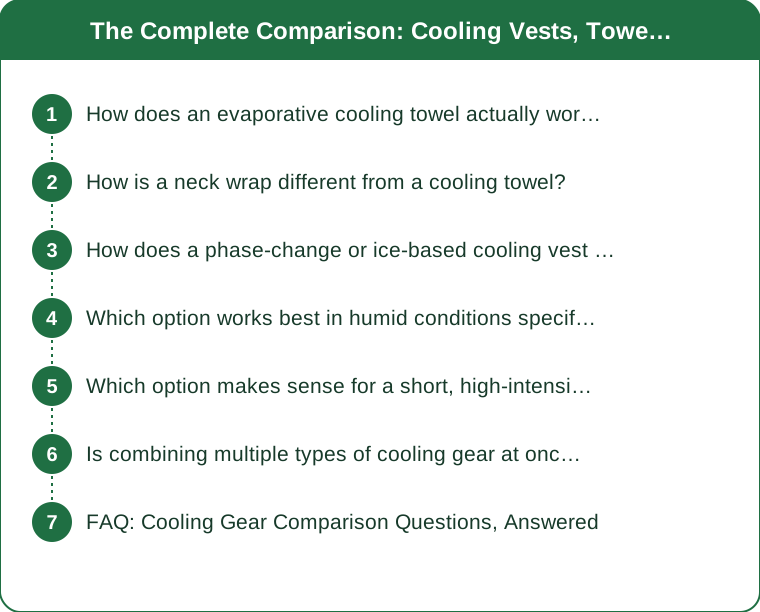
How does an evaporative cooling towel actually work, mechanically?
These towels use a special fabric that holds water and releases it slowly through evaporation, which pulls heat from your skin as it evaporates — the same mechanism as sweat cooling you, just externally applied and reactivated by re-wetting. They cool relatively fast (within minutes of wetting) but the effect fades as the towel dries out, typically needing re-wetting every 20-30 minutes in hot, dry conditions.
How is a neck wrap different from a cooling towel?
Cooling neck wraps often use either the same evaporative technology in a wearable, hands-free format, or in some cases embedded gel beads that provide a more consistent, if milder, cooling sensation. The neck’s proximity to major blood vessels makes it a genuinely effective cooling zone, which is why neck-specific products are common despite covering less skin surface than a towel.
How does a phase-change or ice-based cooling vest work differently?
These vests use ice packs or specialized phase-change material (which absorbs heat while changing from solid to liquid at a controlled temperature) distributed across the torso, providing more sustained, longer-duration cooling than evaporative options — often 1-2+ hours depending on ambient temperature — at the cost of added weight and the need for pre-freezing or pre-chilling before use.

Which option works best in humid conditions specifically?
This is a key differentiator: evaporative cooling towels and neck wraps lose significant effectiveness in high humidity, since evaporation itself slows when the surrounding air is already saturated with moisture. Ice or phase-change vests aren’t dependent on evaporation, so they maintain effectiveness in humid conditions where evaporative gear underperforms.
Which option makes sense for a short, high-intensity workout versus a long outdoor day?
For shorter, high-intensity sessions (under an hour), a cooling towel or neck wrap’s fast, immediate relief is usually sufficient and far more convenient than vest bulk. For longer outdoor commitments (extended hikes, all-day outdoor events, humid-climate endurance training), a cooling vest’s sustained performance becomes more clearly worth the added bulk and prep.
Is combining multiple types of cooling gear at once worth doing?
For particularly extreme heat or long-duration activity, combining a cooling vest with a neck wrap is a common, reasonable strategy — they target overlapping but not identical areas and mechanisms, so the combination can outperform either option alone without meaningfully increasing complexity.
FAQ: Cooling Gear Comparison Questions, Answered
Do cooling vests actually improve athletic performance, or just comfort?
Some research on pre-cooling before intense exercise suggests real performance benefits in hot conditions, not just subjective comfort, particularly for endurance activity in heat.
How long does gel-bead cooling in a neck wrap actually last?
Generally shorter than a proper ice or phase-change vest — often 30-60 minutes before needing to be re-chilled, depending on ambient temperature and the specific product.
Is expensive cooling gear meaningfully better than budget options?
Within each category (evaporative, gel, phase-change), higher-quality materials do tend to perform somewhat better and last longer, but the mechanism category (evaporative vs ice-based) matters more for actual performance than price within a category.
TL;DR:
- Evaporative towels and neck wraps cool fast but fade quickly and underperform in humidity
- Ice and phase-change vests provide longer, more sustained cooling regardless of humidity
- Short, high-intensity sessions usually don’t need more than a towel or neck wrap
- Long outdoor commitments and humid conditions favor a proper cooling vest
- Combining a vest with a neck wrap is a reasonable strategy for extreme heat or long duration
Matching the mechanism to your actual conditions and activity length matters more than picking the most expensive or most-marketed option.
See It in Motion
Seen here: Racerback Tank Top - White — shop similar styles on bubblelime.com
Keep Reading
This article is for general informational and styling purposes only. Fit, sizing, and product availability may vary.