The Complete Guide to Cooling Gear for Menopause Hot Flashes
Quick Answer: Cooling gear for hot flashes works best when it’s fast-acting and always within reach — a small cooling towel or handheld personal fan for sudden onset, plus moisture-wicking sleepwear and bedding for nighttime flashes — since hot flashes, unlike planned summer heat exposure, strike with little warning and need an immediate, portable response rather than pre-planned cooling.
This guide covers why hot flashes need a different cooling approach than general summer heat, which specific products actually help, how to build both a daytime and nighttime strategy, and what’s realistic to expect from cooling gear versus other hot flash management approaches.

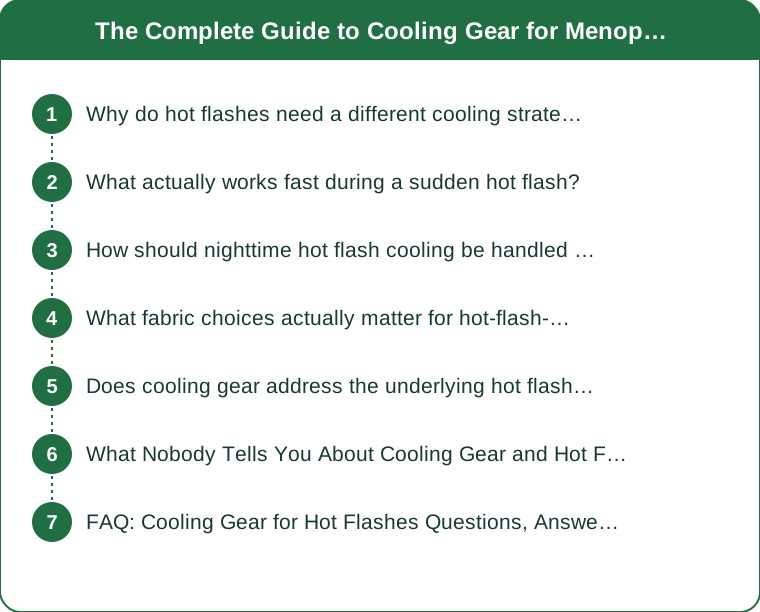
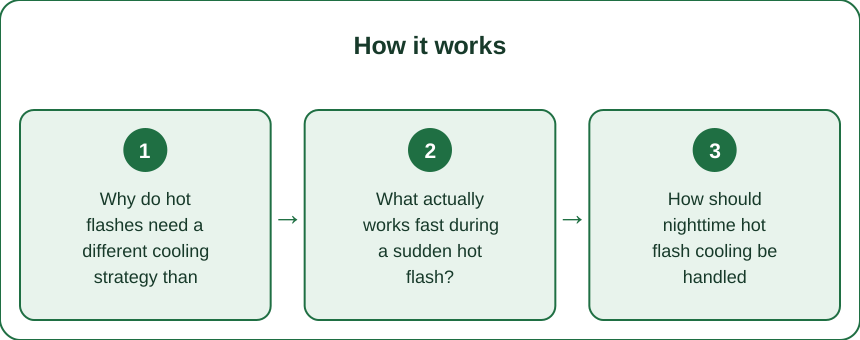
Why do hot flashes need a different cooling strategy than summer heat generally?
Summer heat is predictable and gradual, which allows for pre-planning — dressing appropriately, staying in shade, timing outdoor activity. A hot flash, by contrast, is a sudden, internally-generated temperature spike that can occur regardless of the ambient temperature or how well-prepared you were dressed for the actual weather.
This unpredictability is exactly why hot flash cooling gear needs to prioritize speed and portability over the kind of gradual, planned cooling strategies (shade, hydration timing) that work fine for general summer heat management.
What actually works fast during a sudden hot flash?
A small handheld or clip-on personal fan provides the fastest relief for a sudden flash, since moving air accelerates evaporative cooling on skin almost immediately, which matters when a flash can pass in a few minutes and slower cooling methods don’t kick in fast enough to matter.
A cooling towel (the kind activated by water, not ice-dependent) kept in a bag or desk drawer is a close second option — it can be applied to the neck or wrists within seconds and provides several minutes of active cooling exactly when needed.
How should nighttime hot flash cooling be handled differently?
Nighttime hot flashes disrupt sleep specifically, so the priority shifts from a quick fix to a more sustained cooling environment — moisture-wicking sleepwear, breathable cotton or specialized cooling bedding, and a bedside fan all reduce both the frequency of sleep disruption and how long it takes to fall back asleep after a flash.
Some people also find a cooling pillow (using phase-change material that stays cooler longer than regular pillow material) meaningfully helpful specifically for the moment of waking overheated, which is often the hardest part of a nighttime flash to recover from quickly.

What fabric choices actually matter for hot-flash-prone clothing?
Moisture-wicking, breathable synthetic or specialized natural fibers (like certain treated bamboo or merino blends) move sweat away from skin faster than standard cotton, which matters because a hot flash combined with damp, clinging fabric feels significantly more uncomfortable and takes longer to fully cool down from than the same flash in breathable fabric.
Layering also matters more than it might seem — quick-removal layers (a cardigan that comes off fast, rather than a pullover) let you respond to a sudden flash without an awkward clothing struggle in the moment.
Does cooling gear address the underlying hot flash, and what’s a realistic kit to build?
Cooling gear addresses comfort and recovery time, not the underlying hormonal mechanism causing hot flashes — it’s a symptom management tool, not a treatment for the root cause. For frequent or significantly disruptive hot flashes, it’s worth discussing broader management options (lifestyle factors, and medical options where appropriate) with a doctor, alongside using cooling gear for the immediate discomfort.
What does a realistic full cooling gear kit look like?
A practical kit includes: a small handheld fan (for immediate response), a reusable cooling towel (for a slightly longer, hands-free cooling option), moisture-wicking sleepwear (for nighttime), a bedside fan or cooling pillow insert (for sleep environment), and breathable, easy-layer clothing for daytime unpredictability.
Building this out gradually, prioritizing whichever situation (daytime sudden flashes vs. nighttime sleep disruption) affects you most, is more practical than trying to buy everything at once — most people find one or two items address the bulk of their discomfort before expanding further.
What Nobody Tells You About Cooling Gear and Hot Flash Triggers
Some common hot flash triggers (caffeine, alcohol, spicy food, warm rooms) mean cooling gear works best as part of a broader awareness of your personal trigger pattern, not as a standalone fix used only after a flash has already started — noticing and moderating personal triggers alongside having cooling gear ready reduces both the frequency and the intensity of flashes more than gear alone.
Keeping a simple log of when flashes occur and what preceded them (a specific food, a stressful moment, a particular time of day) for a couple weeks can reveal a personal pattern that’s genuinely useful for reducing frequency, not just managing the discomfort after the fact.
FAQ: Cooling Gear for Hot Flashes Questions, Answered
Is a handheld fan really more effective than a cooling towel for sudden flashes?
For the fastest initial relief, yes — moving air accelerates cooling almost immediately, though a cooling towel provides longer-lasting relief once applied, so many people find using both together works best.
Do cooling mattress pads actually make a noticeable difference for night sweats?
Many people report a meaningful improvement in sleep continuity with cooling mattress pads or toppers, particularly phase-change material versions, though individual results vary and it’s a more significant investment than smaller cooling gear items.
Should I talk to a doctor if hot flashes are frequent and cooling gear isn’t enough?
Yes — frequent, significantly disruptive hot flashes are worth discussing with a doctor, since medical and lifestyle management options exist beyond symptom-management cooling gear, and there’s no need to manage severe symptoms with gear alone. This is general information, not medical advice.
TL;DR:
- Hot flashes need fast, portable cooling gear, unlike planned summer heat management
- A handheld fan and cooling towel offer the fastest relief during a sudden daytime flash
- Moisture-wicking sleepwear and cooling bedding matter most for nighttime disruption
- Cooling gear manages discomfort, not the underlying cause — track triggers and see a doctor if frequent
Building a small, targeted cooling gear kit doesn’t stop hot flashes, but it genuinely shortens how disruptive each one feels. This is general information, not medical advice.
See It in Motion
Seen here: UPF 50+ Short Sleeve Rashguard Swim Shirt — shop it on bubblelime.com
Keep Reading
This article is for general informational and styling purposes only. Fit, sizing, and product availability may vary.