Does Cooling Gear Actually Lower Your Core Body Temperature, or Just Make You Feel Cooler?
Quick Answer: Most consumer cooling gear (towels, neck wraps, basic vests) primarily affects skin surface temperature and perceived comfort rather than meaningfully lowering deep core body temperature, but a specific subset — pre-cooling protocols using ice vests before exercise, studied in sports science — has shown measurable effects on delaying the rise in core temperature during subsequent exercise, which matters for performance in heat. The distinction between surface cooling for comfort and pre-cooling for performance is the key thing most marketing blurs together.
There’s real science behind cooling gear, but it applies more narrowly than most product marketing implies, and knowing the difference changes which products are actually worth using and when.

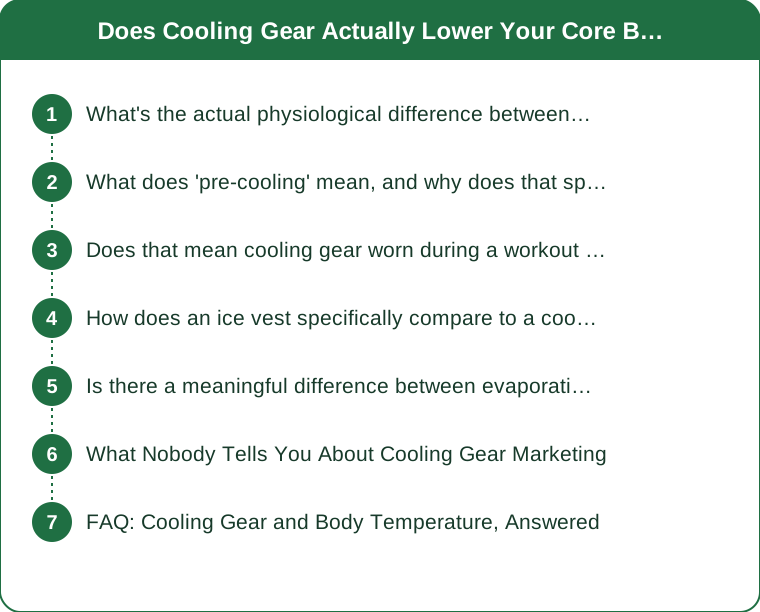
What’s the actual physiological difference between surface cooling and core cooling?
Surface cooling affects the skin and the blood vessels near it, which can reduce perceived exertion and discomfort significantly, but the deep core temperature — the number that actually matters for heat-related performance decline and heat illness risk — is regulated by a more complex system involving overall heat production versus heat dissipation across the whole body. A cooling towel around the neck feels dramatically cooler almost instantly because the neck has a high concentration of thermoreceptors and blood vessels close to the surface, but this sensory cooling effect doesn’t necessarily translate into a measurably lower core temperature reading, which is usually only assessed through methods like core temperature pills or rectal thermometry in actual research settings, not something a consumer product typically measures or claims directly.
What does ‘pre-cooling’ mean, and why does that specific method have stronger evidence?
Pre-cooling refers to actively lowering body temperature before exercise begins, typically through methods like ice vests worn for 20-30 minutes pre-activity, cold water immersion, or ice slurry ingestion, studied specifically in sports science research on athletes performing in hot conditions. Because pre-cooling starts the exercise bout from a lower baseline temperature, it effectively delays the point at which core temperature rises to a level that impairs performance or triggers early fatigue, giving athletes measurably more time before heat-related performance decline sets in. This is different from cooling gear worn during exercise, which has to compete against ongoing heat production from the exercise itself, making the physics of the cooling effect considerably less favorable in real time compared to a pre-cooling protocol done beforehand.
Does that mean cooling gear worn during a workout is basically pointless?
Not pointless, just differently useful — cooling gear worn during exercise still provides real benefits around perceived exertion, comfort, and potentially extending time to voluntary fatigue, even without necessarily lowering deep core temperature significantly during use. Feeling cooler measurably reduces the perceived effort of a given exercise intensity in multiple studies, which can translate into someone training harder or longer than they would in the same heat without the cooling sensation, even if the core temperature effect itself is modest. The benefit is real, it’s just a psychological-performance pathway more than a direct thermoregulatory one for most during-exercise cooling products.

How does an ice vest specifically compare to a cooling towel in terms of actual measured effect?
Ice vests used in pre-cooling protocols involve considerably more surface area contact and colder, more sustained temperatures than a cooling towel typically provides, which is part of why the research specifically supporting core-temperature-related benefits centers on vest-based pre-cooling rather than towels or neck wraps. A cooling towel covers a small surface area and warms relatively quickly as it absorbs body heat, limiting how much total heat it can realistically remove compared to a full vest with a larger cooling surface and typically a longer effective cooling duration before needing to be replaced or re-cooled.
Is there a meaningful difference between evaporative cooling gear and ice-based cooling gear?
Evaporative cooling gear (towels and wraps that work by wetting and then relying on evaporation) depends heavily on ambient humidity to function well, since evaporation slows dramatically in high-humidity conditions, which is a significant limitation that ice-based or gel-based cooling products don’t share since their cooling mechanism doesn’t rely on moisture evaporating into the surrounding air. This means evaporative cooling gear can actually underperform in exactly the humid summer conditions where cooling is most wanted, while ice or gel-based products maintain more consistent performance regardless of humidity level, an important practical distinction that’s rarely mentioned in general product marketing.
What Nobody Tells You About Cooling Gear Marketing
Nobody tells you that a significant amount of cooling gear marketing borrows credibility from the genuinely solid pre-cooling research without clarifying that the product being sold — a towel, a neck wrap, a lightweight vest worn during rather than before exercise — isn’t actually the type of product or protocol that research tested. The core science is real and worth taking seriously, particularly for anyone training seriously in heat, but it applies specifically to pre-cooling protocols using substantial ice-based cooling before activity, not necessarily to every product marketed under the general ‘cooling gear’ umbrella. Reading product claims with that distinction in mind helps separate genuinely evidence-backed purchases from marketing that’s technically not lying, just borrowing adjacent research.
FAQ: Cooling Gear and Body Temperature, Answered
Is it worth combining pre-cooling with during-exercise cooling gear for the best effect?
Yes, some research on athletes in hot conditions suggests combining pre-cooling with continued cooling strategies during exercise provides an additive benefit, delaying performance decline further than either approach alone.
Does cooling gear reduce heat illness risk, or just improve comfort and performance?
Pre-cooling protocols specifically have shown potential to delay the physiological point at which heat illness risk increases during exercise, though cooling gear shouldn’t be relied on as a sole safety measure — recognizing heat illness symptoms and adjusting intensity or stopping remains essential regardless of what cooling gear is used.
How long does a typical ice vest pre-cooling session need to last to be effective?
Most studied protocols use roughly 20-30 minutes of pre-cooling before activity begins, though the effective duration can vary based on the specific product’s cooling capacity and the ambient temperature during the pre-cooling period itself.
TL;DR:
- Most surface cooling gear affects comfort and perceived exertion more than deep core temperature
- Pre-cooling protocols (ice vests worn before exercise) have the strongest evidence for actually delaying core temperature rise
- Cooling gear worn during exercise still helps via reduced perceived exertion, even without major core-temperature change
- Evaporative cooling gear underperforms in high humidity, unlike ice or gel-based products
- Marketing often borrows credibility from pre-cooling research without using the same protocol or product type
The science behind cooling gear is real, it just applies more specifically than most packaging suggests — knowing the difference between pre-cooling and during-exercise comfort helps you buy (and use) the right product for what you’re actually trying to achieve.
See It in Motion
Seen here: Round Neck Long Sleeve Athletic T-Shirt — shop it on bubblelime.com
Keep Reading
This article is for general informational and styling purposes only. Fit, sizing, and product availability may vary.